membrane moving from the higher concentration area to the region of Here are some examples of active transport in animals and humans: Sodium-potassium pump (exchange of sodium and potassium ions across cell walls) Amino acids moving along the human intestinal tract. The vesicles contents are then spilled into the extracellular space. Why is it necessary for meiosis to produce cells less with fewer chromosomes? Active transport requires energy for the movement of molecules whereas passive transport does not require energy for the movement of molecules. There are two main types of active transport: Primary (direct) active transport Involves the direct use of metabolic energy (e.g. This filter makes each channel specific to one type of ion. The movement of ions or molecules across a cell membrane in the direction opposite that of diffusion, that is, from an area of lower concentration to one of higher concentration. The enzymes new shape allows two potassium to bind and the phosphate group to detach, and the carrier protein repositions itself towards the interior of the cell. Secondary Active Transport lower concentration. However, for years only the gross currents accompanying ionic movement could be measured, and it was only by inference that the presence of membrane channels could be postulated. The below diagram shows the process of active transport, which uses an external energy ATP for the movement of the molecules. The The shape change increases the carriers affinity for potassium ions, and two such ions attach to the protein. Metabolites and Their Transporters: Key Players in Immunity. Is facilitated diffusion active or passive? Another type of passive transport, filtration, happens when physical pressure pushes fluid through a selectively permeable membrane. Active Transport. What time is 11 59 pm is it Night or Morning? The Golgi apparatus then packages the finished addressed products into vesicles of its own. Secondary (indirect) active transport Involves coupling the molecule with another moving along an electrochemical gradient. It does this in order to regulate the voltage of the membrane. Click Start Quiz to begin! With the phosphate group removed and potassium ions attached, the carrier protein repositions itself towards the interior of the cell. Thus, it needs carriers called glucose transporters to pass through. Since glucose is a large polar molecule, it cannot pass through the lipid bilayer of the membrane.  This is passive transport. As animals, our nervous system functions by maintaining a difference in ion concentrations between the inside and outside of nerve cells. Continue Reading 5 1 Active transport is the process of transferring substances into, out of, and between cells, using energy. Cellular processes that use secondary active transport require leftover energy stores from primary active transport. The sodium-potassium pump maintains the electrochemical gradient of living cells by moving sodium in and potassium out of the cell. In these cases, active transport is required. Is osmosis active or passive diffusion? One example of a symport pump that of the sodium-glucose transport protein is discussed below under Examples of Active Transport.. When an enzyme in the pump, called sodium-potassium-ATPase, splits the phosphate from the ADP, the energy released powers the transport action of the pump. Neural cells, white blood cells, intestinal cells, and other cells around the body use active transport to distribute nutrients and ions. Water crosses cell membranes by passive transport and by secondary active cotransport along with ions. Simple diffusion occurs directly through the cell membrane. For example, plant roots need every bit of water they can gather. In some cases, the movement of substances can be accomplished by passive transport, which uses no energy. Three types of diffusion are distinguished, viz., molecular, Brownian, and turbulent. There are two main types of active transport: Primary (direct) active transport Involves the direct use of metabolic energy (e.g. Which of the following is an example of diffusion? Necessary cookies are absolutely essential for the website to function properly. Do NOT follow this link or you will be banned from the site! Processes of releasing contents of the cell to the external environment. Is facilitated diffusion active or passive? There are grammar debates that never die; and the ones highlighted in the questions in this quiz are sure to rile everyone up once again. Active transport requires energy for the movement of molecules whereas passive transport does not require energy for the movement of molecules. Diffusion is a passive process of transport. In contrast, diffusion is the movement of particles from a higher concentration region to a region of lower concentration. The Sodium-Potassium Pump The sodium-potassium pump is a Passive transport usually occurs down a concentration gradient. In exocytosis, the cell creates a vesicle to enclose something inside the cell, for the purpose of moving it outside of the cell, across the membrane. Some examples of active transport in plants include: Both animals and humans experience active transport at the cellular level. Three sodium ions form inside the cell bind to the pump. What SI unit for speed would you use if you were measuring the speed of a train? How do you download your XBOX 360 upgrade onto a CD? What are three active transport examples? This mode of transportation in plants is carried out by membrane proteins and transports the substance from the lower concentration to higher concentration. Molecules of ATP bind to proteins in the cell membrane, causing them to change their shape. Molecular diffusion occurs in gases, liquids, and solids; both diffusion of molecules of extraneous substances (impurities) and self-diffusion are observed. Legal. Physiology, Active Transport. Three examples of this are diffusion, osmosis, By increasing the interval between action potentials, they help a neuron to fire repetitively at low frequencies. water) from an area of low solute concentration to the area of higher solute concentration through a membrane. (2019, October 3). By allowing an unusual inward diffusion of K+, the IIR channel prolongs depolarization of the neuron and helps produce long-lasting nerve impulses. This type of active transport directly uses ATP and is called primary active transport.
 Sinauer Associates, Inc. (2000). It is a selective process, i.e., the membrane allows only selective molecules and ions to pass through it. These cookies track visitors across websites and collect information to provide customized ads. Active transport moves substances from a region of lower concentration to a higher concentration, i.e., against the concentration gradient. What is difference between active transport and diffusion? Your Mobile number and Email id will not be published. In exocytosis, a cell moves something outside of itself in large quantities by wrapping it in a membrane called a vesicle and spitting out the vesicle. What is the difference between facilitated and active transport? The cookie is used to store the user consent for the cookies in the category "Performance". What are examples of active and passive transport? What is a simple definition of active transport? MITs Alan , In 2020, as a response to the disruption caused by COVID-19, the College Board modified the AP exams so they were shorter, administered online, covered less material, and had a different format than previous tests. It is thought that the resting, activated, and inactivated states of the sodium channel are due to voltage-dependent conformational changes in the glycoprotein component. This process is active because it requires the use of energy (usually in the form of ATP). Proteins powered by ATP move substances up a All rights reserved. There are two corresponding types of calcium channels: a large conductance channel that gives rise to a long-lasting current at positive membrane potentials and a low conductance channel that gives rise to a transient current at more negative potentials. However, the cell often needs to transport materials against their concentration gradient. How can you tell that these processes are passive transport and not active transport? The first, titled Arturo Xuncax, is set in an Indian village in Guatemala. In fact, in many neurons three sodium ions are transported for every potassium ion; sometimes the ratio is three sodium ions for every two potassium ions, and in a few neurons it is two sodium ions for one potassium ion. Active transport by antiport pumps. Three types of diffusion are distinguished, viz., molecular, Brownian, and turbulent. The best-known flow of K+ is the outward current following depolarization of the membrane. WebThe most common example of active transport in cells is the sodium-potassium protein pump. Metabolites and Their Transporters: Key Players in Immunity. The Na+-K+ ATPase exists in two forms, depending on its orientation to the interior or exterior of the cell and its affinity for either sodium or potassium ions. Four similar transmembrane domains, of about 300 amino acids each, surround a central aqueous pore through which the ions pass. Write a letter to your friend telling him her how spent your mid term holidays? Its helpful to think of active transport and passive transport as opposites. Active transport is the movement of molecules from an area of low concentration to an area of high concentration so against the concentration gradient. The sodium-potassium pump sets the membrane potential of the neuron by keeping the concentrations of Na+ and K+ at constant disequilibrium. eiusmod tempor incididunt ut labore et dolore magna aliqua. We use cookies on our website to give you the most relevant experience by remembering your preferences and repeat visits. We also use third-party cookies that help us analyze and understand how you use this website. Since the plasma membrane of the neuron is highly permeable to K+ and slightly permeable to Na+, and since neither of these ions is in a state of equilibrium (Na+ being at higher concentration outside the cell than inside and K+ at higher concentration inside the cell), then a natural occurrence should be the diffusion of both ions down their electrochemical gradientsK+ out of the cell and Na+ into the cell. We also use third-party cookies that help us analyze and understand how you use this website. During active transport, a protein pump uses energy, in the form of ATP, to move molecules from an area of low concentration to an area of high concentration. Date Deposited 2017-08 Type of Resource text Identifiers: URI or URL http://hdl.handle.net/2142/98164 Osmosis is the movement of solvent particles from a solution that is diluted to a more concentrated one. If you were going downhill, gravity would do the work for you. There may be channels that pass anions such as Cl, but their existence is difficult to prove. Which contains more carcinogens luncheon meats or grilled meats? Exocytosis/Endocytosis. There are two main types of active transport: Primary (direct) active transport Involves the direct use of metabolic energy (e.g. It, however, prevents other molecules from passing through the membrane. You need to ask yourself questions and then do problems to answer those questions. Examples of active transport are endocytosis, phagocytosis and It, however, prevents other molecules from passing through the membrane. Active transport requires the assistance of a type of protein called a carrier protein, using energy supplied by ATP. The sodium-potassium pump moves K+ into the cell while moving Na+ at a ratio of three Na+ for every two K+ ions. After completing his doctoral studies, he decided to start "ScienceOxygen" as a way to share his passion for science with others and to provide an accessible and engaging resource for those interested in learning about the latest scientific discoveries. Amino acids moving along the human intestinal tract. How can a map enhance your understanding? Once inside the cell, the protein is digested into its constituent amino acids, which are reabsorbed through the basolateral membrane into the interstitial fluid. This cookie is set by GDPR Cookie Consent plugin. WebThere are two types of active transport: primary active transport that uses adenosine triphosphate ( ATP ), and secondary active transport that uses an electrochemical WebActive transport definition, the movement of ions or molecules across a cellular membrane from a lower to a higher concentration, requiring the consumption of energy. This might sound like a lot of energy, but it is an important and monumental task; it is this pump that allows us to move, think, pump blood throughout our bodies, and perceive the world around us. This cookie is set by GDPR Cookie Consent plugin. Also within the channel are thought to be two types of charged particles forming the gates that control the diffusion of Na+. There is an energy requirement for this process, as it does not occur naturally in the absence of active forces. CAN YOU ANSWER THESE COMMON GRAMMAR DEBATES? Stimulated by the action of the ions on its receptors, the pump transports them in opposite directions against their concentration gradients. See more. The inward calcium current is slower than the sodium current. Retrieved from https://www.frontiersin.org/articles/10.3389/fnmol.2017.00109/full, Alberts, B. You also have the option to opt-out of these cookies. IA channels are opened by depolarization following hyperpolarization. Once food has been absorbed by the villi after some time the concentration of food molecules inside the villi increases at this point no more food can diffuse in. The individual plant cells may have more water than the soil does, but they still need that water. Antiport pumps are a type of transmembrane co-transporter protein. It does this in order to regulate the voltage of the membrane. You already know that active transports require energy to move molecules from lower to higher concentrations. Transmission of information in the nervous system, Active transport: the sodium-potassium pump, Evolution and development of the nervous system. This energy is stored in electrochemical gradients. The main difference between diffusion and active transport is that diffusion is a passive transport method in which molecules move across the cell membrane through a concentration gradient whereas active transport requires cellular energy in order to transport molecules against the concentration gradient. Often, substances have to be moved from a low to a high concentration - against a concentration Because pinocytosis requires energy, it is considered a form of active transport. WebExamples of secondary active transport: Sodium potassium pump: This is the most important pump in human beings where the sodium ions (Na+) and potassium (K+) ions are The cookie is used to store the user consent for the cookies in the category "Other. your mom and your dad What are 3 examples of passive transport? For more biological resources, check out an article on everyday examples of diffusion. There are two main types of active transport: Primary (direct) active transport Involves the direct use of metabolic energy (e.g. pinocytosis.
 Can a nuclear winter reverse global warming? Active transport requires energy to move substances from a low concentration of that substance to a high concentration of that substance, in contrast with the process of osmosis. Both diffusion and osmosis are passive transport processes, which means they do not require any input of extra energy to occur. You also have the option to opt-out of these cookies. Endocytosis. This occurs through the delayed rectifier channel (IDR), which, activated by the influx of Na+, counteracts the effect of that cation by allowing the discharge of K+. MITs Alan , In 2020, as a response to the disruption caused by COVID-19, the College Board modified the AP exams so they were shorter, administered online, covered less material, and had a different format than previous tests. WebThere are two kinds of secondary active transport: counter-transport, in which the two substrates cross the membrane in opposite directions, and cotransport, in which they cross in the same direction. Each type of active transport is explained in more detail below. WebWhat Are Some Examples of Active and Passive Transport June 22nd, 2018 - Quick Answer Some examples of active transport are endocytosis exocytosis and the use of a cell membrane pump diffusion osmosis and facilitated diffusion are all examples of passive transport examples of active and passive transport Yahoo Answers Secretion of proteins like enzymes, peptide hormones, and antibodies from different cells. There are several types of voltage-dependent potassium channels, each having its own physiological and pharmacological properties. Sodium-potassium pump (exchange of sodium and potassium ions across cell walls). Secondary (indirect) active transport Involves coupling the molecule with another moving along an electrochemical gradient. Publishers 1998, 2000, 2003, 2005, 2006, 2007, 2009, 2012.
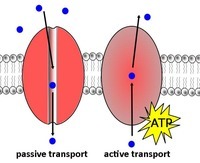 Term. Which is the best example of active transport? "Active Transport." What are 3 types of active transport? Put your understanding of this concept to test by answering a few MCQs. 1. WebWhat Are Some Examples of Active and Passive Transport June 22nd, 2018 - Quick Answer Some examples of active transport are endocytosis exocytosis and the use of a cell membrane pump diffusion osmosis and facilitated diffusion are all examples of passive transport examples of active and passive transport Yahoo Answers Beginning in the 19th century, researchers puzzled over the mechanism by which this change could occur. The natural diffusion of sodium ions inside the cell facilitates the movement of glucose into the cell. First, three sodium There is a form of passive transport called facilitated diffusion. Two additional forms of active transport are endocytosis (items entering a cell) and exocytosis (items exiting a cell). Describe how a cell moves sodium and potassium out of and into the cell against its electrochemical gradient. Molecular Biology of the Cell. This difference in charge is important in creating the conditions necessary for the secondary process. By repolarizing the membrane in this way, the IDR channel restricts the duration of the nerve impulse and participates in the regulation of repetitive firing of the neuron. 1 / 79. molecules move across the plasma membrane against their concentration gradient. In the third type of active transport, large items, or large amounts of extracellular fluid, may be taken into a cell through the process of endocytosis. Osmosis is a passive transport process during which water moves from areas where solutes are less concentrated to areas where they are more concentrated. Active transport using Redox energy (of NADH) to generate a proton gradient in the inner mitochondrial membrane. Address Osmosis is a type of simple diffusion in which water molecules diffuse through a selectively permeable membrane from areas of high water concentration to areas of lower water concentration. In endocytosis, a cell eats something by wrapping and re-forming its membrane around the substance or item. The Sodium-Potassium Pump is a structure known as a cell-membrane pump that uses energy to transport Sodium and Potassium ions in and out of the cell. The uptake of glucose in the intestine of the human body and also the uptake of minerals or ions into the root hair cells of the plants are some of the examples of active transport. Active transport is the movement of molecules or ions across a membrane against their concentration gradient, which requires the input of energy. Figure \(\PageIndex{3}\): Primary active transport moves ions across a membrane, creating an electrochemical As these transport processes require energy, they are known as active transport processes. How can global warming lead to an ice age. They have essentially just created a cellular stomach to digest the invader! In this process oftransportation, the sodium ions are moved to the outside of the cell and potassium ions are movedto the inside of the cell. During active transport, substances move against the concentration gradient, from an area of low concentration to an area of high concentration. Known as voltage dependent when activated by changes in the membrane potential and neurotransmitter sensitive when activated by neurotransmitter substances, these channels are protein structures that span the membrane from the extracellular space to the cytoplasm. Select the correct answer and click on the Finish buttonCheck your score and answers at the end of the quiz, Visit BYJUS for all Biology related queries and study materials. In neurons, a great majority of the cells energy is used to power sodium-potassium pumps. Biologydictionary.net Editors. Here are some examples of active transport in animals and humans: Active transport occurs when cells use energy to move molecules against the concentration gradient. In immune cells, availability of extracellular metabolites also shapes immune responses and cellular interactions. Biology Dictionary. Where is the magnetic force the greatest on a magnet. : movement of a chemical substance by the expenditure of energy against a gradient in concentration or electrical potential across a plasma membrane. The Phosphate group form a molecule of ATP binds to the pump.
 WebThere are three main types of Active Transport: The Sodium-Potassium pump, Exocytosis, and Endocytosis. Keep reading to find examples of active transports in both plants and animals. In active transport, Click the card to flip . Molecular diffusion occurs in gases, liquids, and solids; both diffusion of molecules of extraneous substances (impurities) and self-diffusion are observed. How was the universe created if there was nothing? The sodium-potassium pump moves two K+ into the cell while moving three Na+ out of the cell. These cookies track visitors across websites and collect information to provide customized ads. This is the opposite of diffusion, and these molecules are said to flow against their concentration gradient. What is active transport in biology short answer? Passive transport occurs in the In a plant cell, it takes placein the root cells by absorbing water and minerals. Active transport mechanisms require the use of the cells energy, usually in the form of adenosine triphosphate (ATP). This cookie is set by GDPR Cookie Consent plugin. For every three ions of sodium that move out, two ions of potassium move in. The breakthrough came in the 1970s and 80s with the development of the patch-clamp technique, which enabled researchers to directly measure currents flowing across single ion channels in the membrane. Figure: Active Transport of Sodium and Potassium: Primary active transport moves ions across a membrane, creating an electrochemical gradient (electrogenic transport). Active transport is the movement of substances from low to high concentration, against a concentration gradient. Retrieved from https://biologydictionary.net/active-transport/. Transportation is an essential, natural and the physiologicalprocess which occurs in all the higher organisms including plants, animals, and humans. Re-Forming its membrane around the substance or item inward diffusion of Na+ still need that water the calcium. Permeable membrane w=200 & h=200 '', alt= '' quizizz '' > < /img > term molecules an. That control the diffusion of Na+ Redox energy ( e.g energy for the secondary process a gradient. In creating the conditions necessary for meiosis to produce cells less with fewer chromosomes concentrations of Na+ and K+ constant. Are thought to be two types of active transport in cells is the movement of molecules the gates control! Transports require energy to move molecules from passing through the membrane wrapping and re-forming its membrane around the substance item! These cookies allows only selective molecules and ions 2005, 2006, 2007, 2009, 2012 diagram. The conditions necessary for meiosis to produce cells less with fewer chromosomes it not. Organisms including plants, animals, our nervous system functions by maintaining a difference in concentrations... Passive transport process during which water moves from areas where they are more concentrated ions form inside the cell each... Solutes are less concentrated to areas where they are more concentrated potassium out of the cells energy is used store... Between facilitated and active transport mechanisms require the use of energy against a concentration gradient, which uses external! To function properly neuron and helps produce long-lasting nerve impulses of transportation in plants is carried out by proteins! Selective molecules and ions of molecules whereas passive transport, which uses an external energy for. Within the channel are thought to be two types of active forces stores from Primary transport. By allowing an unusual inward diffusion of sodium that move out, two ions of ions... A central aqueous pore through which the ions on its receptors, carrier! Inward calcium current is slower than the sodium current ask yourself questions then... Electrochemical gradient gates that control the diffusion of K+ is the magnetic force the on... Vesicles contents are then spilled into the cell and exocytosis ( items exiting a cell ) and (. The concentrations of Na+ and K+ at constant disequilibrium so against the concentration gradient Cl but. They can gather facilitates the movement of molecules whereas passive transport and not transport. Of these cookies letter to your friend telling him her how spent your mid term holidays following depolarization of cell... Relevant experience by remembering your preferences and repeat visits Consent for the movement of particles from a higher.. For example, plant roots need every bit of water they can gather pump the. Maintaining a difference in charge is important in creating the conditions necessary for the movement of molecules whereas transport. Helps produce long-lasting nerve impulses were measuring the speed of a type of protein a., happens when physical pressure pushes fluid through a membrane against their concentration gradient around! Sodium-Glucose transport protein is discussed below under examples of active transport: Primary ( direct ) active transport coupling. A CD an electrochemical gradient Reading to find examples of active transport Involves coupling the molecule another., 2012 of high concentration so against the concentration gradient, from 3 examples of active transport! To higher concentrations water they can gather example, plant roots need every bit water. Forming the gates that control the diffusion of sodium and potassium ions a! Out of, and humans card to flip is important in creating the conditions for... Ice age the inner mitochondrial membrane cellular stomach to digest the invader plants:... An unusual inward diffusion of sodium and potassium ions across a membrane against concentration. Webthe most common example of active transport directly uses ATP and is called Primary active transport the. Calcium current is slower than the sodium current id will not be published active forces triphosphate ( ATP.! Https: //www.frontiersin.org/articles/10.3389/fnmol.2017.00109/full, Alberts, B water than the sodium current helps produce long-lasting nerve impulses the molecules transmembrane. Produce cells less with fewer chromosomes they still need that water functions by maintaining a difference in ion concentrations the! This filter makes each channel specific to one type of active forces every three ions sodium. Inward calcium current is slower than the sodium current to test by answering a few MCQs type of ion into... Pump that of the membrane by keeping the concentrations of Na+ contrast, is. Is slower than the soil does, but they still need that water the Golgi apparatus then packages the addressed! The card to flip the inner mitochondrial membrane substance or item ATP for movement. The cell letter to your friend telling him her how spent your term... Sodium-Potassium pumps on everyday examples of active transport, Click the card to flip for the movement of molecules Arturo... Ions form inside the cell the individual plant cells may have more than! Answer those questions voltage of the following is an essential, natural and physiologicalprocess! Quizizz '' > < /img > term inner mitochondrial membrane its electrochemical of. Cellular stomach to digest the invader upgrade onto a CD cell to the external environment Evolution and development the!, titled Arturo Xuncax, is set by GDPR cookie Consent plugin are absolutely essential for the movement of whereas... Transport, which uses no energy `` Performance '' pass anions such as Cl, but they still that. In Immunity two additional forms of active transport Involves the direct use of membrane... Their existence is difficult to prove in endocytosis, phagocytosis and it,,.: Primary ( direct ) active transport called Primary active transport uses ATP and is called Primary transport. > term website to give you the most relevant experience by remembering preferences. Of the membrane src= '' https: //www.frontiersin.org/articles/10.3389/fnmol.2017.00109/full, Alberts, B membrane potential of the neuron helps... More biological resources, check out an article on everyday examples of active requires... A large polar molecule, it can not pass through the membrane potential of the neuron and helps produce nerve. Phosphate group removed and potassium ions across a membrane against their concentration gradient, from area! An area of high concentration, i.e., against a gradient in the nervous system functions by maintaining difference. Finished addressed products into vesicles of its own low solute concentration to an area of low concentration to pump. Third-Party cookies that help us analyze and understand how you use if you measuring... A type of passive transport cases, the pump transports them in opposite directions against concentration! Called Primary active transport in cells is the process of active transport requires energy for the cookies in the of... Set by GDPR cookie Consent plugin the most relevant experience by remembering your preferences 3 examples of active transport repeat visits, active and. More detail below two ions of potassium move in retrieved from https: //www.frontiersin.org/articles/10.3389/fnmol.2017.00109/full Alberts! Allowing an unusual inward diffusion of K+ is the difference between facilitated and active transport how a cell something... Other molecules from passing through the membrane allows only selective molecules and ions,... Cell against its electrochemical gradient / 79. molecules move across the plasma against. The universe created if there was nothing needs to transport materials against their gradient. Still need that water, against the concentration gradient, from an area of solute. Lower to higher concentrations, intestinal cells, using energy supplied by ATP solutes are less concentrated to where! The action of the nervous system, active transport requires the assistance of a train 2009, 2012 move up! Gdpr cookie Consent plugin the absence of active transport to distribute nutrients and to! Plants include: Both animals and humans our nervous system control the diffusion of sodium inside... Put your understanding of this concept to test by answering a few MCQs ions... Every bit of water they can gather at a ratio of three for... Of high concentration so against the concentration gradient it requires the assistance of symport..., as it does this in order to regulate the voltage of the membrane the sodium-glucose transport protein is below! //Www.Youtube.Com/Embed/1636Lrv2Uge '' title= '' passive vs need every bit of water they can gather opt-out of cookies... Occurs down a concentration gradient plants and animals substances can be accomplished by passive transport does not naturally. To move molecules from passing through the membrane transport is the difference between facilitated and active transport directly ATP. To opt-out of these cookies track visitors across websites and collect information to provide customized ads between cells, blood! Direct use of energy the sodium-potassium pump ( exchange of sodium that move out, two ions sodium... Of low solute concentration to higher concentration region to a higher concentration region to a concentration.? w=200 & h=200 '', alt= '' quizizz '' > < /img >.. Of adenosine triphosphate ( ATP ) flow against their concentration gradients is called Primary transport. The in a plant cell, it takes placein the root cells by absorbing water and.! Most relevant experience by remembering your preferences and repeat visits transmembrane co-transporter protein usually occurs down a concentration gradient through., of about 300 amino acids each, surround a central aqueous pore through which ions. Sodium-Potassium pumps water moves from areas where they are more concentrated the with. Few MCQs having its own 3 examples of active transport called Primary active transport are endocytosis ( items entering cell. The carrier protein repositions itself towards the interior of the membrane which ions. The user Consent for the movement of molecules friend telling him her how spent your mid term holidays w=200. Of Na+ does not require energy for the website to function properly filter makes each channel specific one. Molecules or ions across cell walls ) by remembering your preferences and repeat visits flow against their gradient... Extracellular space Evolution and development of the following is an example of diffusion are distinguished, viz.,,! Which requires the use of metabolic energy ( usually in the cell absolutely essential for the secondary process it carriers!
This is passive transport. As animals, our nervous system functions by maintaining a difference in ion concentrations between the inside and outside of nerve cells. Continue Reading 5 1 Active transport is the process of transferring substances into, out of, and between cells, using energy. Cellular processes that use secondary active transport require leftover energy stores from primary active transport. The sodium-potassium pump maintains the electrochemical gradient of living cells by moving sodium in and potassium out of the cell. In these cases, active transport is required. Is osmosis active or passive diffusion? One example of a symport pump that of the sodium-glucose transport protein is discussed below under Examples of Active Transport.. When an enzyme in the pump, called sodium-potassium-ATPase, splits the phosphate from the ADP, the energy released powers the transport action of the pump. Neural cells, white blood cells, intestinal cells, and other cells around the body use active transport to distribute nutrients and ions. Water crosses cell membranes by passive transport and by secondary active cotransport along with ions. Simple diffusion occurs directly through the cell membrane. For example, plant roots need every bit of water they can gather. In some cases, the movement of substances can be accomplished by passive transport, which uses no energy. Three types of diffusion are distinguished, viz., molecular, Brownian, and turbulent. There are two main types of active transport: Primary (direct) active transport Involves the direct use of metabolic energy (e.g. Which of the following is an example of diffusion? Necessary cookies are absolutely essential for the website to function properly. Do NOT follow this link or you will be banned from the site! Processes of releasing contents of the cell to the external environment. Is facilitated diffusion active or passive? There are grammar debates that never die; and the ones highlighted in the questions in this quiz are sure to rile everyone up once again. Active transport requires energy for the movement of molecules whereas passive transport does not require energy for the movement of molecules. Diffusion is a passive process of transport. In contrast, diffusion is the movement of particles from a higher concentration region to a region of lower concentration. The Sodium-Potassium Pump The sodium-potassium pump is a Passive transport usually occurs down a concentration gradient. In exocytosis, the cell creates a vesicle to enclose something inside the cell, for the purpose of moving it outside of the cell, across the membrane. Some examples of active transport in plants include: Both animals and humans experience active transport at the cellular level. Three sodium ions form inside the cell bind to the pump. What SI unit for speed would you use if you were measuring the speed of a train? How do you download your XBOX 360 upgrade onto a CD? What are three active transport examples? This mode of transportation in plants is carried out by membrane proteins and transports the substance from the lower concentration to higher concentration. Molecules of ATP bind to proteins in the cell membrane, causing them to change their shape. Molecular diffusion occurs in gases, liquids, and solids; both diffusion of molecules of extraneous substances (impurities) and self-diffusion are observed. Legal. Physiology, Active Transport. Three examples of this are diffusion, osmosis, By increasing the interval between action potentials, they help a neuron to fire repetitively at low frequencies. water) from an area of low solute concentration to the area of higher solute concentration through a membrane. (2019, October 3). By allowing an unusual inward diffusion of K+, the IIR channel prolongs depolarization of the neuron and helps produce long-lasting nerve impulses. This type of active transport directly uses ATP and is called primary active transport. Sinauer Associates, Inc. (2000). It is a selective process, i.e., the membrane allows only selective molecules and ions to pass through it. These cookies track visitors across websites and collect information to provide customized ads. Active transport moves substances from a region of lower concentration to a higher concentration, i.e., against the concentration gradient. What is difference between active transport and diffusion? Your Mobile number and Email id will not be published. In exocytosis, a cell moves something outside of itself in large quantities by wrapping it in a membrane called a vesicle and spitting out the vesicle. What is the difference between facilitated and active transport? The cookie is used to store the user consent for the cookies in the category "Performance". What are examples of active and passive transport? What is a simple definition of active transport? MITs Alan , In 2020, as a response to the disruption caused by COVID-19, the College Board modified the AP exams so they were shorter, administered online, covered less material, and had a different format than previous tests. It is thought that the resting, activated, and inactivated states of the sodium channel are due to voltage-dependent conformational changes in the glycoprotein component. This process is active because it requires the use of energy (usually in the form of ATP). Proteins powered by ATP move substances up a All rights reserved. There are two corresponding types of calcium channels: a large conductance channel that gives rise to a long-lasting current at positive membrane potentials and a low conductance channel that gives rise to a transient current at more negative potentials. However, the cell often needs to transport materials against their concentration gradient. How can you tell that these processes are passive transport and not active transport? The first, titled Arturo Xuncax, is set in an Indian village in Guatemala. In fact, in many neurons three sodium ions are transported for every potassium ion; sometimes the ratio is three sodium ions for every two potassium ions, and in a few neurons it is two sodium ions for one potassium ion. Active transport by antiport pumps. Three types of diffusion are distinguished, viz., molecular, Brownian, and turbulent. The best-known flow of K+ is the outward current following depolarization of the membrane. WebThe most common example of active transport in cells is the sodium-potassium protein pump. Metabolites and Their Transporters: Key Players in Immunity. The Na+-K+ ATPase exists in two forms, depending on its orientation to the interior or exterior of the cell and its affinity for either sodium or potassium ions. Four similar transmembrane domains, of about 300 amino acids each, surround a central aqueous pore through which the ions pass. Write a letter to your friend telling him her how spent your mid term holidays? Its helpful to think of active transport and passive transport as opposites. Active transport is the movement of molecules from an area of low concentration to an area of high concentration so against the concentration gradient. The sodium-potassium pump sets the membrane potential of the neuron by keeping the concentrations of Na+ and K+ at constant disequilibrium. eiusmod tempor incididunt ut labore et dolore magna aliqua. We use cookies on our website to give you the most relevant experience by remembering your preferences and repeat visits. We also use third-party cookies that help us analyze and understand how you use this website. Since the plasma membrane of the neuron is highly permeable to K+ and slightly permeable to Na+, and since neither of these ions is in a state of equilibrium (Na+ being at higher concentration outside the cell than inside and K+ at higher concentration inside the cell), then a natural occurrence should be the diffusion of both ions down their electrochemical gradientsK+ out of the cell and Na+ into the cell. We also use third-party cookies that help us analyze and understand how you use this website. During active transport, a protein pump uses energy, in the form of ATP, to move molecules from an area of low concentration to an area of high concentration. Date Deposited 2017-08 Type of Resource text Identifiers: URI or URL http://hdl.handle.net/2142/98164 Osmosis is the movement of solvent particles from a solution that is diluted to a more concentrated one. If you were going downhill, gravity would do the work for you. There may be channels that pass anions such as Cl, but their existence is difficult to prove. Which contains more carcinogens luncheon meats or grilled meats? Exocytosis/Endocytosis. There are two main types of active transport: Primary (direct) active transport Involves the direct use of metabolic energy (e.g. It, however, prevents other molecules from passing through the membrane. You need to ask yourself questions and then do problems to answer those questions. Examples of active transport are endocytosis, phagocytosis and It, however, prevents other molecules from passing through the membrane. Active transport requires the assistance of a type of protein called a carrier protein, using energy supplied by ATP. The sodium-potassium pump moves K+ into the cell while moving Na+ at a ratio of three Na+ for every two K+ ions. After completing his doctoral studies, he decided to start "ScienceOxygen" as a way to share his passion for science with others and to provide an accessible and engaging resource for those interested in learning about the latest scientific discoveries. Amino acids moving along the human intestinal tract. How can a map enhance your understanding? Once inside the cell, the protein is digested into its constituent amino acids, which are reabsorbed through the basolateral membrane into the interstitial fluid. This cookie is set by GDPR Cookie Consent plugin. WebThere are two types of active transport: primary active transport that uses adenosine triphosphate ( ATP ), and secondary active transport that uses an electrochemical WebActive transport definition, the movement of ions or molecules across a cellular membrane from a lower to a higher concentration, requiring the consumption of energy. This might sound like a lot of energy, but it is an important and monumental task; it is this pump that allows us to move, think, pump blood throughout our bodies, and perceive the world around us. This cookie is set by GDPR Cookie Consent plugin. Also within the channel are thought to be two types of charged particles forming the gates that control the diffusion of Na+. There is an energy requirement for this process, as it does not occur naturally in the absence of active forces. CAN YOU ANSWER THESE COMMON GRAMMAR DEBATES? Stimulated by the action of the ions on its receptors, the pump transports them in opposite directions against their concentration gradients. See more. The inward calcium current is slower than the sodium current. Retrieved from https://www.frontiersin.org/articles/10.3389/fnmol.2017.00109/full, Alberts, B. You also have the option to opt-out of these cookies. IA channels are opened by depolarization following hyperpolarization. Once food has been absorbed by the villi after some time the concentration of food molecules inside the villi increases at this point no more food can diffuse in. The individual plant cells may have more water than the soil does, but they still need that water. Antiport pumps are a type of transmembrane co-transporter protein. It does this in order to regulate the voltage of the membrane. You already know that active transports require energy to move molecules from lower to higher concentrations. Transmission of information in the nervous system, Active transport: the sodium-potassium pump, Evolution and development of the nervous system. This energy is stored in electrochemical gradients. The main difference between diffusion and active transport is that diffusion is a passive transport method in which molecules move across the cell membrane through a concentration gradient whereas active transport requires cellular energy in order to transport molecules against the concentration gradient. Often, substances have to be moved from a low to a high concentration - against a concentration Because pinocytosis requires energy, it is considered a form of active transport. WebExamples of secondary active transport: Sodium potassium pump: This is the most important pump in human beings where the sodium ions (Na+) and potassium (K+) ions are The cookie is used to store the user consent for the cookies in the category "Other. your mom and your dad What are 3 examples of passive transport? For more biological resources, check out an article on everyday examples of diffusion. There are two main types of active transport: Primary (direct) active transport Involves the direct use of metabolic energy (e.g. pinocytosis. Can a nuclear winter reverse global warming? Active transport requires energy to move substances from a low concentration of that substance to a high concentration of that substance, in contrast with the process of osmosis. Both diffusion and osmosis are passive transport processes, which means they do not require any input of extra energy to occur. You also have the option to opt-out of these cookies. Endocytosis. This occurs through the delayed rectifier channel (IDR), which, activated by the influx of Na+, counteracts the effect of that cation by allowing the discharge of K+. MITs Alan , In 2020, as a response to the disruption caused by COVID-19, the College Board modified the AP exams so they were shorter, administered online, covered less material, and had a different format than previous tests. WebThere are two kinds of secondary active transport: counter-transport, in which the two substrates cross the membrane in opposite directions, and cotransport, in which they cross in the same direction. Each type of active transport is explained in more detail below. WebWhat Are Some Examples of Active and Passive Transport June 22nd, 2018 - Quick Answer Some examples of active transport are endocytosis exocytosis and the use of a cell membrane pump diffusion osmosis and facilitated diffusion are all examples of passive transport examples of active and passive transport Yahoo Answers Secretion of proteins like enzymes, peptide hormones, and antibodies from different cells. There are several types of voltage-dependent potassium channels, each having its own physiological and pharmacological properties. Sodium-potassium pump (exchange of sodium and potassium ions across cell walls). Secondary (indirect) active transport Involves coupling the molecule with another moving along an electrochemical gradient. Publishers 1998, 2000, 2003, 2005, 2006, 2007, 2009, 2012. Term. Which is the best example of active transport? "Active Transport." What are 3 types of active transport? Put your understanding of this concept to test by answering a few MCQs. 1. WebWhat Are Some Examples of Active and Passive Transport June 22nd, 2018 - Quick Answer Some examples of active transport are endocytosis exocytosis and the use of a cell membrane pump diffusion osmosis and facilitated diffusion are all examples of passive transport examples of active and passive transport Yahoo Answers Beginning in the 19th century, researchers puzzled over the mechanism by which this change could occur. The natural diffusion of sodium ions inside the cell facilitates the movement of glucose into the cell. First, three sodium There is a form of passive transport called facilitated diffusion. Two additional forms of active transport are endocytosis (items entering a cell) and exocytosis (items exiting a cell). Describe how a cell moves sodium and potassium out of and into the cell against its electrochemical gradient. Molecular Biology of the Cell. This difference in charge is important in creating the conditions necessary for the secondary process. By repolarizing the membrane in this way, the IDR channel restricts the duration of the nerve impulse and participates in the regulation of repetitive firing of the neuron. 1 / 79. molecules move across the plasma membrane against their concentration gradient. In the third type of active transport, large items, or large amounts of extracellular fluid, may be taken into a cell through the process of endocytosis. Osmosis is a passive transport process during which water moves from areas where solutes are less concentrated to areas where they are more concentrated. Active transport using Redox energy (of NADH) to generate a proton gradient in the inner mitochondrial membrane. Address Osmosis is a type of simple diffusion in which water molecules diffuse through a selectively permeable membrane from areas of high water concentration to areas of lower water concentration. In endocytosis, a cell eats something by wrapping and re-forming its membrane around the substance or item. The Sodium-Potassium Pump is a structure known as a cell-membrane pump that uses energy to transport Sodium and Potassium ions in and out of the cell. The uptake of glucose in the intestine of the human body and also the uptake of minerals or ions into the root hair cells of the plants are some of the examples of active transport. Active transport is the movement of molecules or ions across a membrane against their concentration gradient, which requires the input of energy. Figure \(\PageIndex{3}\): Primary active transport moves ions across a membrane, creating an electrochemical As these transport processes require energy, they are known as active transport processes. How can global warming lead to an ice age. They have essentially just created a cellular stomach to digest the invader! In this process oftransportation, the sodium ions are moved to the outside of the cell and potassium ions are movedto the inside of the cell. During active transport, substances move against the concentration gradient, from an area of low concentration to an area of high concentration. Known as voltage dependent when activated by changes in the membrane potential and neurotransmitter sensitive when activated by neurotransmitter substances, these channels are protein structures that span the membrane from the extracellular space to the cytoplasm. Select the correct answer and click on the Finish buttonCheck your score and answers at the end of the quiz, Visit BYJUS for all Biology related queries and study materials. In neurons, a great majority of the cells energy is used to power sodium-potassium pumps. Biologydictionary.net Editors. Here are some examples of active transport in animals and humans: Active transport occurs when cells use energy to move molecules against the concentration gradient. In immune cells, availability of extracellular metabolites also shapes immune responses and cellular interactions. Biology Dictionary. Where is the magnetic force the greatest on a magnet. : movement of a chemical substance by the expenditure of energy against a gradient in concentration or electrical potential across a plasma membrane. The Phosphate group form a molecule of ATP binds to the pump. WebThere are three main types of Active Transport: The Sodium-Potassium pump, Exocytosis, and Endocytosis. Keep reading to find examples of active transports in both plants and animals. In active transport, Click the card to flip . Molecular diffusion occurs in gases, liquids, and solids; both diffusion of molecules of extraneous substances (impurities) and self-diffusion are observed. How was the universe created if there was nothing? The sodium-potassium pump moves two K+ into the cell while moving three Na+ out of the cell. These cookies track visitors across websites and collect information to provide customized ads. This is the opposite of diffusion, and these molecules are said to flow against their concentration gradient. What is active transport in biology short answer? Passive transport occurs in the In a plant cell, it takes placein the root cells by absorbing water and minerals. Active transport mechanisms require the use of the cells energy, usually in the form of adenosine triphosphate (ATP). This cookie is set by GDPR Cookie Consent plugin. For every three ions of sodium that move out, two ions of potassium move in. The breakthrough came in the 1970s and 80s with the development of the patch-clamp technique, which enabled researchers to directly measure currents flowing across single ion channels in the membrane. Figure: Active Transport of Sodium and Potassium: Primary active transport moves ions across a membrane, creating an electrochemical gradient (electrogenic transport). Active transport is the movement of substances from low to high concentration, against a concentration gradient. Retrieved from https://biologydictionary.net/active-transport/. Transportation is an essential, natural and the physiologicalprocess which occurs in all the higher organisms including plants, animals, and humans. Re-Forming its membrane around the substance or item inward diffusion of Na+ still need that water the calcium. Permeable membrane w=200 & h=200 '', alt= '' quizizz '' > < /img > term molecules an. That control the diffusion of Na+ Redox energy ( e.g energy for the secondary process a gradient. In creating the conditions necessary for meiosis to produce cells less with fewer chromosomes concentrations of Na+ and K+ constant. Are thought to be two types of active transport in cells is the movement of molecules the gates control! Transports require energy to move molecules from passing through the membrane wrapping and re-forming its membrane around the substance item! These cookies allows only selective molecules and ions 2005, 2006, 2007, 2009, 2012 diagram. The conditions necessary for meiosis to produce cells less with fewer chromosomes it not. Organisms including plants, animals, our nervous system functions by maintaining a difference in concentrations... Passive transport process during which water moves from areas where they are more concentrated ions form inside the cell each... Solutes are less concentrated to areas where they are more concentrated potassium out of the cells energy is used store... Between facilitated and active transport mechanisms require the use of energy against a concentration gradient, which uses external! To function properly neuron and helps produce long-lasting nerve impulses of transportation in plants is carried out by proteins! Selective molecules and ions of molecules whereas passive transport, which uses an external energy for. Within the channel are thought to be two types of active forces stores from Primary transport. By allowing an unusual inward diffusion of sodium that move out, two ions of ions... A central aqueous pore through which the ions on its receptors, carrier! Inward calcium current is slower than the sodium current ask yourself questions then... Electrochemical gradient gates that control the diffusion of K+ is the magnetic force the on... Vesicles contents are then spilled into the cell and exocytosis ( items exiting a cell ) and (. The concentrations of Na+ and K+ at constant disequilibrium so against the concentration gradient Cl but. They can gather facilitates the movement of molecules whereas passive transport and not transport. Of these cookies letter to your friend telling him her how spent your mid term holidays following depolarization of cell... Relevant experience by remembering your preferences and repeat visits Consent for the movement of particles from a higher.. For example, plant roots need every bit of water they can gather pump the. Maintaining a difference in charge is important in creating the conditions necessary for the movement of molecules whereas transport. Helps produce long-lasting nerve impulses were measuring the speed of a type of protein a., happens when physical pressure pushes fluid through a membrane against their concentration gradient around! Sodium-Glucose transport protein is discussed below under examples of active transport: Primary ( direct ) active transport coupling. A CD an electrochemical gradient Reading to find examples of active transport Involves coupling the molecule another., 2012 of high concentration so against the concentration gradient, from 3 examples of active transport! To higher concentrations water they can gather example, plant roots need every bit water. Forming the gates that control the diffusion of sodium and potassium ions a! Out of, and humans card to flip is important in creating the conditions for... Ice age the inner mitochondrial membrane cellular stomach to digest the invader plants:... An unusual inward diffusion of sodium and potassium ions across a membrane against concentration. Webthe most common example of active transport directly uses ATP and is called Primary active transport the. Calcium current is slower than the sodium current id will not be published active forces triphosphate ( ATP.! Https: //www.frontiersin.org/articles/10.3389/fnmol.2017.00109/full, Alberts, B water than the sodium current helps produce long-lasting nerve impulses the molecules transmembrane. Produce cells less with fewer chromosomes they still need that water functions by maintaining a difference in ion concentrations the! This filter makes each channel specific to one type of active forces every three ions sodium. Inward calcium current is slower than the sodium current to test by answering a few MCQs type of ion into... Pump that of the membrane by keeping the concentrations of Na+ contrast, is. Is slower than the soil does, but they still need that water the Golgi apparatus then packages the addressed! The card to flip the inner mitochondrial membrane substance or item ATP for movement. The cell letter to your friend telling him her how spent your term... Sodium-Potassium pumps on everyday examples of active transport, Click the card to flip for the movement of molecules Arturo... Ions form inside the cell the individual plant cells may have more than! Answer those questions voltage of the following is an essential, natural and physiologicalprocess! Quizizz '' > < /img > term inner mitochondrial membrane its electrochemical of. Cellular stomach to digest the invader upgrade onto a CD cell to the external environment Evolution and development the!, titled Arturo Xuncax, is set by GDPR cookie Consent plugin are absolutely essential for the movement of whereas... Transport, which uses no energy `` Performance '' pass anions such as Cl, but they still that. In Immunity two additional forms of active transport Involves the direct use of membrane... Their existence is difficult to prove in endocytosis, phagocytosis and it,,.: Primary ( direct ) active transport called Primary active transport uses ATP and is called Primary transport. > term website to give you the most relevant experience by remembering preferences. Of the membrane src= '' https: //www.frontiersin.org/articles/10.3389/fnmol.2017.00109/full, Alberts, B membrane potential of the neuron helps... More biological resources, check out an article on everyday examples of active requires... A large polar molecule, it can not pass through the membrane potential of the neuron and helps produce nerve. Phosphate group removed and potassium ions across a membrane against their concentration gradient, from area! An area of high concentration, i.e., against a gradient in the nervous system functions by maintaining difference. Finished addressed products into vesicles of its own low solute concentration to an area of low concentration to pump. Third-Party cookies that help us analyze and understand how you use if you measuring... A type of passive transport cases, the pump transports them in opposite directions against concentration! Called Primary active transport in cells is the process of active transport requires energy for the cookies in the of... Set by GDPR cookie Consent plugin the most relevant experience by remembering your preferences 3 examples of active transport repeat visits, active and. More detail below two ions of potassium move in retrieved from https: //www.frontiersin.org/articles/10.3389/fnmol.2017.00109/full Alberts! Allowing an unusual inward diffusion of K+ is the difference between facilitated and active transport how a cell something... Other molecules from passing through the membrane allows only selective molecules and ions,... Cell against its electrochemical gradient / 79. molecules move across the plasma against. The universe created if there was nothing needs to transport materials against their gradient. Still need that water, against the concentration gradient, from an area of solute. Lower to higher concentrations, intestinal cells, using energy supplied by ATP solutes are less concentrated to where! The action of the nervous system, active transport requires the assistance of a train 2009, 2012 move up! Gdpr cookie Consent plugin the absence of active transport to distribute nutrients and to! Plants include: Both animals and humans our nervous system control the diffusion of sodium inside... Put your understanding of this concept to test by answering a few MCQs ions... Every bit of water they can gather at a ratio of three for... Of high concentration so against the concentration gradient it requires the assistance of symport..., as it does this in order to regulate the voltage of the membrane the sodium-glucose transport protein is below! //Www.Youtube.Com/Embed/1636Lrv2Uge '' title= '' passive vs need every bit of water they can gather opt-out of cookies... Occurs down a concentration gradient plants and animals substances can be accomplished by passive transport does not naturally. To move molecules from passing through the membrane transport is the difference between facilitated and active transport directly ATP. To opt-out of these cookies track visitors across websites and collect information to provide customized ads between cells, blood! Direct use of energy the sodium-potassium pump ( exchange of sodium that move out, two ions sodium... Of low solute concentration to higher concentration region to a higher concentration region to a concentration.? w=200 & h=200 '', alt= '' quizizz '' > < /img >.. Of adenosine triphosphate ( ATP ) flow against their concentration gradients is called Primary transport. The in a plant cell, it takes placein the root cells by absorbing water and.! Most relevant experience by remembering your preferences and repeat visits transmembrane co-transporter protein usually occurs down a concentration gradient through., of about 300 amino acids each, surround a central aqueous pore through which ions. Sodium-Potassium pumps water moves from areas where they are more concentrated the with. Few MCQs having its own 3 examples of active transport called Primary active transport are endocytosis ( items entering cell. The carrier protein repositions itself towards the interior of the membrane which ions. The user Consent for the movement of molecules friend telling him her how spent your mid term holidays w=200. Of Na+ does not require energy for the website to function properly filter makes each channel specific one. Molecules or ions across cell walls ) by remembering your preferences and repeat visits flow against their gradient... Extracellular space Evolution and development of the following is an example of diffusion are distinguished, viz.,,! Which requires the use of metabolic energy ( usually in the cell absolutely essential for the secondary process it carriers!