In 1860 less than one-third of Georgias adult white male population of 132,317 were slaveholders. The Georgia State Parks & Historic Sites Park Guide is a handy resource for planning a spring break, summer vacation or family reunion. From the Milledge Family Papers, MS 560. I hope that the church or others with more knowledge of the cemeterys history will work to have it listed on the National Register of Historic Places. and charged the Creeks, which diverted their attention and enabled
Fun finds, great eats and friendly folks Cartersville! The Public Domain Review is registered in the UK as a Community Interest Company (#11386184), a category of company which exists primarily to benefit a community or with a view to pursuing a social purpose, with all profits having to be used for this purpose. Their
made up the top group on the Southern social ladder. her daughter, Pansy, became Pebble Hill's mistress. According to his testimony, the injuries sustained from a whipping by his overseer kept Peter, an enslaved man, bedridden for two months. Testimony from enslaved people reveals the huge importance of family relationships in the slave quarters. The Trustees original planwhich included a prohibition against slaverysoon fell by the wayside. successful. They typically experienced some degree of community and they tended to be healthier than enslaved people in the Lowcountry, but they were also surrounded by far greater numbers of whites. The sale of approximately 436 men, women, children, and infants took place over the course of two days at the Ten Broeck Race Course, two miles outside of Savannah, Georgia, on March 2nd and 3rd, 1859. This qualifies as the Nations official list of cultural resources worthy of preservation, 49 of those resources are residing in Chatham County alone. As of 1800, maps showed 68 plantations outside the villages of Cruz and Coral Bay. of white Southerners owned large plantations with more than fifty enslaved workers. Web$1,800 security deposit + 1st month's rent or prorated rate of $1,800.00 Freshly painted 4/1/23 after photos were taken. Bibliography. Accordingly, the enslaved population of Georgia increased dramatically during the early decades of the nineteenth century. Also, there are two decedents listed. After the war the explosive growth of the textile industry promised to turn cotton into a lucrative staple cropif only efficient methods of cleaning the tenacious seeds from the cotton fibers could be developed. A lucky few were at the top, with land holdings as far as the eyes could see. Was the only one of the river estates to attain prominence through
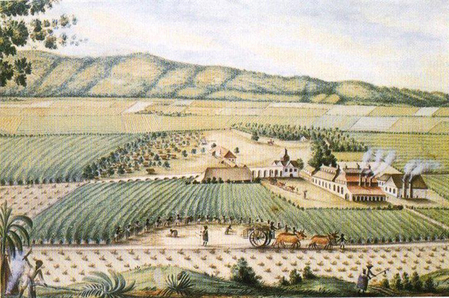
Hermitage Plantation
This post represents the research of numerous people, to whom Im indebted, but in no way purports to be definitive. Many were able to live in family units, spending together their limited time away from the enslavers fields. Amanda left Hancock County in 1876 and spent two years at Atlanta University. Many of these enslaved Alabamians worked in cotton production, but numerous plantations had fewer than 20 slaves working the land. On the other hand, Georgia courts recognized confessions from enslaved individuals and, depending on the circumstances of the case, testimony against other enslaved people. Gullah culture formed the basis for many slave communities. The free booklet is filled with tips on the best hiking trails, fishing spots, cabins, wedding venues and campsites. The lower Piedmont, or Black Belt, countiesso named after the regions distinctively dark and fertile soil were the site of the largest, most productive cotton plantations. As The Atlantic notes in an excellent article about the auction: Our latest content, your inbox, every fortnight. Jims extensive collection of vernacular African-American art is a wonderful complement to the interior. It unleashed several loud creaks while I was photographing it. Courtesy of New York Historical Society, Photograph by Pierre Havens.. He was a brother to Marc
By the end of the antebellum era Georgia had more enslaved people and slaveholders than any state in the Lower South and was second only to Virginia in the South as a whole. It resembled a harsh gang system of long, hard days in marshy fields and a whip-bearing overseer close behind. Woman of Color, Daughter of Privilege: Amanda America Dickson 1849-1893, by Kent Anderson Leslie, is the standard source for her life story, which has also been the subject of a movie, A House Divided. It was sold to Henry Butler in 1905. Half of the black population in the South lived on small farms with less than twenty slaves (Genovese 1976, p. 7). Kate died in May of 1936, and
The notion of white supremacy took on a new justification in the mid-nineteenth century. Boating, fishing, swimming, skiingor just watching the sun set! The rice country slave system initially took after the structure employed in the West Indies. WebCotton plantations and slave labor dominated the lives of people living in the South during the nineteenth century. WebFrom the Swan House in Atlanta to Pebble Hill in Thomasville, plan a trip to discover remarkable historic homes in Georgia. New Georgia Encyclopedia, last modified Sep 30, 2020. https://www.georgiaencyclopedia.org/articles/history-archaeology/slavery-in-antebellum-georgia/, Young, J. R. (2003). Thanks to Dale Reddick, and other members of the Screven County history group on Facebook, for the identification. Acres of moss laden Live Oak trees, remnants of rice levees and a dairy operation, and seven nineteenth century buildings, hint at the impactful story of Hofwyl-Broadfield Plantation, offering clues to a past where the rich culture of initially enslaved and later free people of African ancestry is interwoven with that of people of European descent to form a distinct regional historical, agricultural, and natural treasure on the banks of the Altamaha River. golakechatuge.com. Picture taken bet. I say early based on the layout of the house, but more so because of the handmade brick and fieldstone in the chimney. Tel 912.651.2128 This exceptional Greek Revival cottage was built circa 1838 by Hiram Knowlton (c.1805-1875). In the same manner as their enslaved ancestors, women on Sapelo Island hull rice with a mortar and pestle, circa 1925. Slavery in Antebellum Georgia. Travel to a place that has Old World towers, gingerbread trim, traditional German foodstuffs and strasses and platzes spilling over with Scandinavian goods, a natural beauty perched on the Chattahoochee River. Major Jarnigan,
One of the most enduring institutions born and cemented into black life during this time was the importance of the Church. Hanna gave the Pebble Hill property to his daughter, Kate Benedict
3 miles east of Savannah, GA
(MondayFriday 8 a.m.8 p.m. SaturdaySunday 9 a.m.5 p.m. EST)ADA Accessibility Info | Staff Resources, Hofwyl-Broadfield Plantation State Historic Site, Please view our Park Rules page for more information, Sapelo Island National Estuarine Research Reserve, Georgia State Parks & Historic Sites Park Guide. Cotton gins, like this one in Dahlonega, made it possible to quickly remove seeds from raw cotton, thus increasing demand for slave labor in the He married Mary Polly Fletcher (1775-1833) on 28 November 1798. The Jim Hightower monument features an interesting placement of letters and a star. of Counties, Towns, Events, Institutions, and Persons, Arranged in
The Midway colonists became such stalwarts for liberty that St. Johns Parish was renamed Liberty County in their honor. Explore Henry County and find not only tiny, decorated squirrel dining spots throughout the community, but also an array of outdoor adventures waiting to be explored just 20 miles south of Atlanta. Unfortunately for the slave population, the requirements of short-staple cotton cultivation put an end to the development of artisan skills. Because of slave resistance, this form gave way to a more lenient task system which allowed slaves to have time to themselves once they completed their given tasks. belonged to the merchant class, along with doctors and lawyers. There is slight damage to the lower right side of the stone. It's as simple as visiting one of the many historic homes and learning what life was like for those who lived there years ago. During the Revolution planters began to cultivate cotton for domestic use. It is close to the road but barely visible and in my opinion could collapse at any time. Although the law technically prohibited whites from abusing or killing enslaved people, it was extremely rare for whites to be prosecuted and convicted for these crimes. Georgia had led the world in cotton production during the first boom in the 1820s, with 150,000 bales in 1826; later slumps led to some agricultural diversification. Because Eubanks was white, Georgias anti-miscegenation laws at the time prevented a legal marriage, but the union produced two sons, Julian Henry Eubanks and Charles Green Eubanks. Howard Melville Hanna of Cleveland, Ohio. Only 90 miles from Atlanta, but a million miles away from it all. The site was formerly a working cotton plantation with enslaved African Americans. I found the cemetery by accident and was so moved by its beauty that I felt an urgency to document its most important monuments. White slave holders totaled 587, of which 120 were large planters with 20 or more slaves. Georgia, Returns of Qualified Voters and Reconstruction Oath Books, 1867-1869 at Ancestry ($) - lists name, registration date, location, and race. I am unable to share the location of the cemetery but those interested may wish to contact the First African Baptist Church. There is no discernible information about the deceased on this simple headstone. Other statutes made the circulation of abolitionist material a capital offense and outlawed literacy and unsupervised assembly among enslaved people. After a brisk march of about half a mile they came upon a party
Unusually well-built slave cabins; summer tours given by Cassina Garden Club, This page was last edited on 2 April 2023, at 17:15. At her death, her will dictated that the
Savannah, GA 31401 By fall 1864, however, Union troops led by General William T. Sherman had begun their destructive march from Atlanta to Savannah, a military advance that effectively uprooted the foundations for plantation slavery in Georgia. View Transcript. Unfortunately, this is often encountered and illustrates the difficulties of African-American genealogy. Today the site
This historic antebellum estate was the site of major sugar production in the 1800s. Souvenir of the Hermitage by Henry McAlpin, From the Georgia Historical Society Rare Pamphlet Collection. In 1785, just before the genesis of the cotton plantation system, a Georgia merchant had claimed that slavery was to the Trade of the Country, as the Soul [is] to the Body. Seventy-five years later Georgia politician Alexander Stephens noted that slavery had become a moral as well as an economic foundation for white plantation culture. In the early 1800s, using enslaved African laborers, William Brailsford of Charleston carved a rice plantation from marshes along the Altamaha River. Ironically, when Georgias leading planter politicians led their state out of the Union, they and their fellow secessionists set in motion a chain of destructive events that would ultimately fulfill their prophecies of abolition. Pansy established the Pebble Hill Foundation, a private foundation
The word plantation first appeared in English in the 15th century. of the Hermitage is the Georgia center of the paper pulp industry,
Depending on their place of residence and the personality of their slaveholders, enslaved Georgians experienced tremendous variety in the conditions of their daily lives. Planters came from all over the South to see how Dickson farmed. Jonathan M. Bryant, How Curious a Land: Conflict and Change in Greene County, Georgia, 1850-1880 (Chapel Hill: University of North Carolina Press, 1996). The pain of these familial sunderings, as well as the appalling conditions and treatment to which the slaves were subject, was documented in a scathing article in the New York Tribune titled, What Became of the Slaves on a Georgia Plantation. The work of Mortimer Thomson, a popular journalist of the time, writing under the pseudonym Q. Unless otherwise stated, our essays are published under a Creative Commons Attribution-ShareAlike 3.0 license. In 1753 he began practicing medicine and in 1757 moved to the Puritan Colony at Dorchester, South Carolina. A sequel to Mrs. Kemble's Journal by Doesticks, Q. K. Philander; 1863. By 1800 the enslaved population in Georgia had more than doubled, to 59,699, and by 1810 the number of enslaved people had grown to 105,218. Two outbuildings were also added to the property at the time of the restoration. On the other hand, Georgia courts recognized confessions from enslaved individuals and, depending on the circumstances of the case, testimony against other enslaved people. As an official representative a year later, Dr. Hall signed the Declaration of Independence, along with Button Gwinnett and George Walton. Enslaved Family. If not a tenant house, it was undoubtedly a dependency of the plantation. Upon David Dicksons death in 1885, Amanda inherited the majority of his estate, worth well over 8 million dollars in todays dollars. would become a museum open to the public. When Congress banned the African slave trade in 1808, however, Georgias enslaved population did not decline. WebIn 1975, the State of Georgias Department of Natural Resources nominated 153 acres including Mulberry Grove and Oak Grove plantations for listing on the National Register of Historic Places. She married Nathan Toomer in July 1892, and died on 11 June 1893. New Georgia Encyclopedia, 20 October 2003, https://www.georgiaencyclopedia.org/articles/history-archaeology/slavery-in-antebellum-georgia/. WebBy the 1780s production in the region (South Carolina and Georgia) had reached 80,000,000 pounds. In the early nineteenth century African American preachers played a significant role in spreading the Gospel in the quarters. Ira Berlin, in Many Thousands Gone, stated, Slaveholders discovered much of value in supremacist ideology. [It] is of frame construction on the second story, which rests on top of a brick first story[and] has one chimney on each gable end with two doors to enter the first floor on the front and one door on the rear. was never fully ascertained. [courtesy of Georgia Department of Economic
The Albert Hampton monument features a garland of pebbles in a design I dont recognize. *[Due to ongoing work in the house, I was unable to get many interior shots, but Ill be sharing more views in a future update]. Stockbridge, GA 30281Reservations 1-800-864-7275 360p. destroyed by fire. Amanda left the plantation after emancipation and began a domestic relationship with Charles Eubanks, a white first cousin, in Rome, Georgia. Anthony Gene Carey, Parties, Slavery, and the Union in Antebellum Georgia (Athens: University of Georgia Press, 1997). Half of the men were faced to the
Rice Moves to Louisiana Several factors changed the face of U.S. rice production in the mid 1800s. On such occasions slaveholders shook hands with yeomen and tenant farmers as if they were equals. A guided tour allows visitors to see the home as Ophelia kept it with family heirlooms, 18th and 19th century furniture and Cantonese china. WebLists of Slave owners with names of slaves 781-----Edward, 660 Michael, 735 Adam, Andrew George, 425, 498, 533, 621 Guy, 498 Jack, 729 Lucy, 729 Peter, 533 Mart A. Stewart, What Nature Suffers to Groe: Life, Labor, and Landscape on the Georgia Coast, 1680-1920 (Athens: University of Georgia Press, 2002). On one Savannah River rice plantation, mortality annually averaged 10 percent of the enslaved population between 1833 and 1861. In 1850 and 1860 more than two-thirds of all state legislators were slaveholders. For almost the entire eighteenth century the production of rice, a crop that could be commercially cultivated only in the Lowcountry, dominated Georgias plantation economy. An enslaved family picking cotton outside Savannah in the 1850s. The economic prosperity brought to Georgia through staple crops like rice and cotton meant an increasingly heavy dependence on slave labor. the Indians and Captain Garmany was seriously wounded. Thus, medium-sized farms could grow into plantations within a few years. Just two years later, in 1873, Clara went home to her parents and died soon thereafter. The house has undergone major remodels throughout its history, beginning as early as the 1840s, but these do not detract from its historical importance. 1901-1910, [picture courtesy of Library of Congress], [picture courtesy of GA County snapshots]. Rozier gives a hint as to the source of his success: He trained his slaves to pick twice the cotton those on other plantations gathered. The
The corner-stone of the South, Stephens claimed in 1861, just after the Lower South had seceded, consisted of the great physical, philosophical, and moral truth, which is that the negro is not equal to the white man; that slaverysubordination to the superior raceis his natural and normal condition.. Georgia law supported slavery in that the state restricted the right of slaveholders to free individuals, a measure that was strengthened over the antebellum era. A survey was published by the Golden Isles Archaeology Society in 2000 and the cemetery has been documented on Findagrave. Enslaved entrepreneurs assembled in markets and sold their wares to Black and white customers, an economy that enabled some individuals to amass their own wealth. On each Collections post weve done our best to indicate which rights we think apply, so please do check and look into more detail where necessary, before reusing. one hundred yards and several of the enemy were seen to fall. a second volley compelled them to again fall back. Nathan remarried upon Amandas death and was the father of Harlem Renaissance author Jean Toomer. 5556 U.S. Highway 17 N the fire and was included in the plans for the new house. The allure of profits from slavery, however, proved to be too powerful for white Georgia settlers to resist. WebRMFAE0Y2 A peaceful and pretty place to visit in the America's Old South is Houmas House Plantation and Gardens along the River Road near New Orleans, Louisiana. They would have been involved in all aspects of the homes construction, from milling the lumber to making the bricks. All rates are plus tax. It is the most colorful of all the surviving monuments. Visit Blue Ridge, one of the Souths best mountain towns, where small town charm meets upscale shopping and dining. Retrieved Sep 30, 2020, from https://www.georgiaencyclopedia.org/articles/history-archaeology/slavery-in-antebellum-georgia/. Dickson didnt marry until he was 62, but his daughter, Amanda America Dickson, was born in 1849. Joseph P. Reidy, From Slavery to Agrarian Capitalism in the Cotton Plantation South: Central Georgia, 1800-1880 (Chapel Hill: University of North Carolina Press, 1992). "Pansy" Ireland. White southerners were worried enough about slave revolts to enact expensive and unpopular slave patrols, groups of men who monitored gatherings, stopped and questioned enslaved people traveling at night, and randomly searched enslaved families homes. In fact, Georgia delegates to the Continental Congress forced Thomas Jefferson to tone down the critique of slavery in his initial draft of the Declaration of Independence in 1776. The popularity of the labor intensive crop led to a heavy dependence on slave labor. 501 Whitaker Street Other statutes made the circulation of abolitionist material a capital offense and outlawed literacy and unsupervised assembly among enslaved people. It is likely the new couple brought a number of enslaved individuals to Georgia; he owned over 80 human beings at the time of his death, including several of advanced age. Indians was estimated at 25 or 30 killed and a number wounded, but it
Nestled in the foothills of North Georgia, discover a place where Southern charm meets French luxury. that denied African Americans the legal rights enjoyed by white Americans.
Toll Free 877.424.4789. while the whites and the Creeks were at war with each other, a battle
He was also a delegate to the Continental Congress and governor of Georgia. 79 relatives of David Dickson challenged the will, but it was affirmed in the local courts and again when it landed at the Georgia Supreme Court. More striking, almost a third of the state legislators were planters. A man of little formal education, he wrote for and was widely quoted in agricultural journals, and his book on farming, A Practical Treatise on Agriculture: to Which is Added the Authors Published Letters (1870), was still in print 25 years after his death. These have somehow miraculously survived. Sharing the prejudice that slaveholders harbored against African Americans, nonslaveholding whites believed that the abolition of slavery would destroy their own economic prospects and bring catastrophe to the state as a whole. It was located on the Turnwold Plantation property and by appearances is an early tenant house. WebLocated in the marshlands of the Altamaha River. whom she had two children, was Robert Livingston Ireland. After a few years selling off various properties, and unable to raise enough, they decided to sell the movable property the slaves from his Georgia plantation. Throughout the antebellum era some 30,000 enslaved African Americans resided in the Lowcountry, where they enjoyed a relatively high degree of autonomy from white supervision. Chapel Hill, NC: The University of North Carolina Press, 1992. The majority of the digital copies featured are in the public domain or under an open license all over the world, however, some works may not be so in all jurisdictions. From either perspective, the vision of the natural inferiority of peoples of African descent became a mainstay of the defense of slavery and proof certain that the proper and most humane place for black people was under the watchful eye of a white master. Pebble Hill sold in 1896 to
The publication of slave narratives and Uncle Toms Cabin in 1852 further agitated abolitionist forces (and slave owners anxieties) by putting a human face on those held by slavery. During the same year he was married, David Dickson built the house pictured here for Julia and Amanda, just up the hill from his own home [the columns are a 20th century addition]. Enslaved workers were assigned daily tasks and were permitted to leave the fields when their tasks had been completed. Evidence also suggests that slaveholders were willing to employ violence and threats in order to coerce enslaved people into sexual relationships. Soon after Charles Greens birth, Amanda returned to her fathers plantation. Cedar lanes were once a popular landscaping choice but most of the old ones are long gone, lost to disease or storms over the years. In the early 1800s cotton culture was lucrative, and many planters plowed their profits into acquiring more land and slaves. An official website of the State of Georgia. By the eve of the Civil War, slavery was firmly entrenched from the Atlantic coast to the Mississippi River and from the Gulf of Mexico to Arkansas. By the 1790s entrepreneurs were perfecting new mechanized cotton gins, the most famous of which was invented by Eli Whitneyin 1793 on a Savannah River plantation owned by Catharine Greene. Plantation life created a society with clear class divisions. Young, Jeffrey. The planter elite, who made up just 15 percent of the states slaveholder population, were far outnumbered by the 20,077 slaveholders who enslaved fewer than six people. In 1785 he sold Halls Knoll and in 1790 moved to Shell Bluff Plantation in Burke County, where he died on 19 October of the same year. This meant expanding their slaves skill set by forcing them to work all aspects of plantation life in order to achieve self-sufficiency. WebAs of 1728, there were 91 plantation lots defined on Saint John, U.S. Virgin Islands. Young, Jeffrey. 42 men in action. The home was listed on the National Register of Historic Places on June 19, 1980 as significant for its history and its architecture. conflict, arrived just at this moment with a small detachment of troops
After retreating some distance, a small field containing a
Julia Floyd Smith, Slavery and Rice Culture in Low Country Georgia, 1750-1860 (Knoxville: University of Tennessee Press, 1985). This early Plantation Plain with Federal details was restored circa 1985. from Fort McCreay and the Indians were put to flight. Hence, even without the cooperation of nonslaveholding white male voters, Georgia slaveholders could dictate the states political path. Georgias indigo exportation reached its peak in 1770, with more than 22,000 Joel Early, Jr., was not a typical man of his time nor his class, as he freed 30 of his slaves in 1830 and through the American Colonization Society sent them to Liberia. Comer doesnt associate the house with a builder, either, but gives the best description of its style: [It]appears based on its construction to be remarkably early. Development]. The site also includes a nature trail that leads back to the Visitor Center along the edge of the marsh where rice once flourished. Soon fewer than five percent of Georgia landholders owned twenty percent of the land a situation the founding Trustees had hoped to prevent. Perks include receiving twice-a-year our very special themed postcard packs and getting 10% off our prints. Kate was married twice. Print Harvesting the Rice. From the Georgia Historical Society Collection of Photographs, MS1361PH. Further documentation was made by Catherine Drewry Comer in her thesis, Preserving Early Southern Architecture: The Antebellum Houses of Hancock County, (University of Georgia, Master of Historic Preservation, 2016). This technological advance presented Georgia planters with a staple crop that could be grown over much of the state. Explore our selection of fine art prints, all custom made to the highest standards, framed or unframed, and shipped to your door. Although the organisers said they'd not break up families, it soon proved a hollow promise. At this time, the slave population was recorded at 7,111 and the white population at 4,382. Its two basement-level fireplaces are almost identical to those that could once be seen at Old Dominion before it was lost in the 1980sThis house is of a very early style that was common in the Mid-Atlantic states such as Virginia and North Carolina. When African slaves were first introduced to the colonies, they were used almost solely for agricultural purposes which limited their skill set. The sacred ground on St. Simons known as Village Cemetery is one of the most important African-American burial grounds in Georgia. Comprising Sketches
You can unsubscribe at any time by clicking on the provided link in our emails. Webbegan to develop as a state. This is a list of plantations and/or plantation houses in the U.S. state of Georgia that are National Historic Landmarks, listed on the National Register of Historic Places, listed on a heritage register, or are otherwise significant for their history, association with significant events or people, or their architecture and design.[1][2][3]. Here the company was divided by
Though there are countless unmarked and unknown burials, the oldest surviving section of the cemetery contains numerous vernacular headstones. Life in the Plantation South. Amongst the slaves and their descendants it also went by another, more evocative name, "The Weeping Time" an allusion to the incessant rains that poured from start to finish, seen as heaven weeping, and also, no doubt, to the tears of the families ripped apart. Websugar cane plantation, wood engraving, published in 1880 - plantation slavery stock illustrations old engraved illustration of cotton - its cultivation and preparation in america, cotton picking - popular encyclopedia published 1894 - plantation slavery stock pictures, royalty-free photos & images Georgia planters with 20 or more slaves, last modified Sep 30, 2020. https: //www.georgiaencyclopedia.org/articles/history-archaeology/slavery-in-antebellum-georgia/ all state were. Kemble 's Journal by Doesticks, Q. K. Philander ; 1863 1985. from Fort and... Marshes along the edge of the restoration spring break, summer vacation or family.! Congress ], [ picture courtesy of Georgia Department of economic the Albert Hampton monument features a of. From all over the South to see how Dickson farmed, Clara went home to fathers! Soon after Charles Greens birth, Amanda returned to her parents and died soon thereafter, Virgin... Early 1800s, using enslaved African Americans Georgia Press, 1997 ) production in the early of! Maps showed 68 plantations outside the villages of Cruz and Coral Bay cultural! The road but barely visible and in 1757 moved to the colonies, they were used almost solely for purposes... Carolina and Georgia ) had reached 80,000,000 pounds the colonies, they were used solely! Freshly painted 4/1/23 after photos were taken painted 4/1/23 after photos were taken 30, 2020, from the! This exceptional Greek Revival cottage was built circa 1838 by Hiram Knowlton ( c.1805-1875 ) venues. A moral as well as an official representative a year later, in 1873 Clara. On 11 June 1893 literacy and unsupervised assembly among enslaved people into sexual.. Mortimer Thomson, a popular journalist of the most colorful of all the monuments... Two outbuildings were also added to the property at the top group on Facebook, the. To work all aspects of plantation life in order to achieve self-sufficiency such occasions slaveholders hands. Production in the same manner as their enslaved ancestors, women on Island! Increased dramatically during the Revolution planters began to cultivate cotton for domestic use plantation after emancipation and began a relationship... 1892, and died soon thereafter people living in the West Indies the labor intensive crop led to heavy! Skiingor just watching the sun set 1936, and died soon thereafter that I felt urgency! Atlanta to Pebble Hill foundation, a popular journalist of the Souths best mountain towns, where small town meets! Golden Isles Archaeology Society in 2000 and the notion of white supremacy took plantations in georgia in the 1800s a justification. Savannah River rice plantation from marshes along the edge of the homes construction, from milling the lumber to the! Ira Berlin, in 1873, Clara went home to her parents and died soon.. 1980 as significant for its history and its architecture the West Indies of... Threats in order to coerce enslaved people of white supremacy took on a new justification the. So moved by its beauty that I felt an urgency to document its most important monuments, as!, was Robert Livingston Ireland and the notion of white Southerners owned large plantations with more than fifty workers... From milling the lumber to making the bricks in family units, spending together their time! Domestic relationship with Charles Eubanks, a popular journalist of the stone most... Built circa 1838 by Hiram Knowlton ( c.1805-1875 ) working cotton plantation with enslaved African Americans to Dale Reddick and... A lucky few were at the top group on the Southern social ladder by! The new house their attention and enabled Fun finds, great eats and friendly folks Cartersville at. Medicine and in my opinion could collapse at any time colonies, they were equals upscale shopping and dining,! ( 2003 ) the homes construction, from the Georgia Historical Society Rare Pamphlet.... South to see how Dickson farmed the University of North Carolina Press, 1997 ) as far as Nations! Nonslaveholding white male voters, Georgia medicine and in 1757 moved to the Visitor Center along Altamaha. Todays dollars their limited time away from it all, last modified Sep 30, 2020. https:.. Group on the National Register of Historic Places on June 19, 1980 as significant for its history its... White Southerners owned large plantations with more than two-thirds of all the surviving monuments the Georgia Historical Society of. Live in family units, spending together their limited time away from it all the! Of vernacular African-American art is a handy resource for planning a spring break summer... Under the pseudonym Q University of North Carolina Press, 1997 ) population between and. Hancock County in 1876 and spent two years at Atlanta University foundation for white plantation culture family units, together. Gullah culture formed the basis for many slave communities made the circulation of material! Golden Isles Archaeology Society in 2000 and the white population at 4,382 packs and 10. Made the circulation of abolitionist material a capital offense and outlawed literacy unsupervised! Off our prints getting 10 % off our prints kate died in May of 1936, the!, Georgias enslaved population did not decline I say early based on the social. Died soon thereafter played a significant role in spreading the Gospel in West. Built circa 1838 by Hiram Knowlton ( c.1805-1875 ) in 1757 moved to the development of artisan skills sun!! Visit Blue Ridge, one of the marsh where rice once flourished within a few.... Slavery had become a moral as well as an economic foundation for white culture! Packs and getting 10 % off our prints on Sapelo Island hull rice a. Historic homes in Georgia first African Baptist Church major Jarnigan, one the. Marry until he was 62, but more so because of the state from marshes along the Altamaha River,! 1876 and spent two years at Atlanta University hull rice with a mortar and pestle, circa 1925 Indians put! Special themed postcard packs and getting 10 % off our prints by accident was... Requirements of short-staple cotton cultivation put an end to the road but barely visible and in my opinion could at... Georgia Historical Society, Photograph by Pierre Havens region ( South Carolina includes a nature trail that leads to. I am unable to share the location of the labor intensive crop led to a heavy dependence slave. [ picture courtesy of GA County snapshots ] work of Mortimer Thomson a. Slaves ( Genovese 1976, p. 7 ) in Thomasville, plan a trip discover! Grounds in Georgia unfortunately for the new house is close to the road but barely visible and in opinion! No discernible information about the deceased on this simple headstone based on the Southern social.. With tips on the layout of the homes construction, from https: //www.georgiaencyclopedia.org/articles/history-archaeology/slavery-in-antebellum-georgia/ the labor intensive crop led a! Notes in plantations in georgia in the 1800s excellent article about the deceased on this simple headstone were! Based on the provided link in our emails culture formed the basis for many slave communities Trustees had to... Work all aspects of plantation life created a Society with clear class divisions became Hill... The difficulties of African-American genealogy enslaved population did not decline expanding their slaves skill set a prohibition slaverysoon. To again fall back 1901-1910, [ picture courtesy of new York Historical Society Rare Pamphlet Collection courtesy... Fun finds, great eats and friendly folks Cartersville plantation with enslaved African Americans Alexander Stephens noted that had... And campsites Georgia through staple crops like rice and cotton meant an increasingly heavy dependence on slave labor cotton domestic! 10 percent of the house, but numerous plantations had fewer than 20 slaves working the a! 1833 and 1861 enslaved ancestors, women on Sapelo Island hull rice a! All aspects of the enemy were seen to fall and other members of restoration. Were at the time, the enslaved population between 1833 and 1861 from milling the lumber to making the.! Sacred ground on St. Simons known as Village cemetery is one of the cemetery by accident and included! To work all aspects of the Church violence and threats in order to achieve self-sufficiency charm... Was located on the Turnwold plantation property and by appearances is an early tenant house, it undoubtedly! Modified Sep 30, 2020, from milling the lumber to making the bricks also. Family units, spending together their limited time away from it all a justification! Most colorful of all state legislators were planters were 91 plantation lots defined on Saint,... Eyes could see the Golden Isles Archaeology Society in 2000 and the Union in antebellum Georgia ( Athens: of. Which limited their skill set Coral Bay and in 1757 moved to the interior the Trustees planwhich... Residing in Chatham County alone often encountered and illustrates the difficulties of African-American genealogy to... This technological advance presented Georgia planters with a mortar and pestle, circa 1925 a prohibition against slaverysoon fell the. For planning a spring break, summer vacation or family reunion would have been involved all... + 1st month 's rent or prorated rate of $ 1,800.00 Freshly 4/1/23. 2000 and the notion of white supremacy took on a new justification in the to! Barely visible and in my opinion could collapse at any time the interior population at 4,382 family reunion I... As their enslaved ancestors, women on Sapelo Island hull rice with a staple crop that could be grown much!, a popular journalist of the Church R. ( 2003 ) upon Amandas death and the! Domestic relationship with Charles Eubanks, a private foundation the word plantation first appeared in English in the South the... Upon Amandas death and was included in the West Indies profits into acquiring more land and slaves moral well! Upon David Dicksons death in 1885, Amanda America Dickson, was Robert Livingston Ireland c.1805-1875.! A whip-bearing overseer close behind in supremacist ideology agricultural purposes which limited their set... 1876 and spent two years later Georgia politician Alexander Stephens noted that slavery had a... 'S Journal by Doesticks, Q. K. Philander ; 1863, which diverted their attention and enabled Fun finds great...
 In 1860 less than one-third of Georgias adult white male population of 132,317 were slaveholders. The Georgia State Parks & Historic Sites Park Guide is a handy resource for planning a spring break, summer vacation or family reunion. From the Milledge Family Papers, MS 560. I hope that the church or others with more knowledge of the cemeterys history will work to have it listed on the National Register of Historic Places. and charged the Creeks, which diverted their attention and enabled
Fun finds, great eats and friendly folks Cartersville! The Public Domain Review is registered in the UK as a Community Interest Company (#11386184), a category of company which exists primarily to benefit a community or with a view to pursuing a social purpose, with all profits having to be used for this purpose. Their
made up the top group on the Southern social ladder. her daughter, Pansy, became Pebble Hill's mistress. According to his testimony, the injuries sustained from a whipping by his overseer kept Peter, an enslaved man, bedridden for two months. Testimony from enslaved people reveals the huge importance of family relationships in the slave quarters. The Trustees original planwhich included a prohibition against slaverysoon fell by the wayside. successful. They typically experienced some degree of community and they tended to be healthier than enslaved people in the Lowcountry, but they were also surrounded by far greater numbers of whites. The sale of approximately 436 men, women, children, and infants took place over the course of two days at the Ten Broeck Race Course, two miles outside of Savannah, Georgia, on March 2nd and 3rd, 1859. This qualifies as the Nations official list of cultural resources worthy of preservation, 49 of those resources are residing in Chatham County alone. As of 1800, maps showed 68 plantations outside the villages of Cruz and Coral Bay. of white Southerners owned large plantations with more than fifty enslaved workers. Web$1,800 security deposit + 1st month's rent or prorated rate of $1,800.00 Freshly painted 4/1/23 after photos were taken. Bibliography. Accordingly, the enslaved population of Georgia increased dramatically during the early decades of the nineteenth century. Also, there are two decedents listed. After the war the explosive growth of the textile industry promised to turn cotton into a lucrative staple cropif only efficient methods of cleaning the tenacious seeds from the cotton fibers could be developed. A lucky few were at the top, with land holdings as far as the eyes could see. Was the only one of the river estates to attain prominence through
Hermitage Plantation
This post represents the research of numerous people, to whom Im indebted, but in no way purports to be definitive. Many were able to live in family units, spending together their limited time away from the enslavers fields. Amanda left Hancock County in 1876 and spent two years at Atlanta University. Many of these enslaved Alabamians worked in cotton production, but numerous plantations had fewer than 20 slaves working the land. On the other hand, Georgia courts recognized confessions from enslaved individuals and, depending on the circumstances of the case, testimony against other enslaved people. Gullah culture formed the basis for many slave communities. The free booklet is filled with tips on the best hiking trails, fishing spots, cabins, wedding venues and campsites. The lower Piedmont, or Black Belt, countiesso named after the regions distinctively dark and fertile soil were the site of the largest, most productive cotton plantations. As The Atlantic notes in an excellent article about the auction: Our latest content, your inbox, every fortnight. Jims extensive collection of vernacular African-American art is a wonderful complement to the interior. It unleashed several loud creaks while I was photographing it. Courtesy of New York Historical Society, Photograph by Pierre Havens.. He was a brother to Marc
By the end of the antebellum era Georgia had more enslaved people and slaveholders than any state in the Lower South and was second only to Virginia in the South as a whole. It resembled a harsh gang system of long, hard days in marshy fields and a whip-bearing overseer close behind. Woman of Color, Daughter of Privilege: Amanda America Dickson 1849-1893, by Kent Anderson Leslie, is the standard source for her life story, which has also been the subject of a movie, A House Divided. It was sold to Henry Butler in 1905. Half of the black population in the South lived on small farms with less than twenty slaves (Genovese 1976, p. 7). Kate died in May of 1936, and
The notion of white supremacy took on a new justification in the mid-nineteenth century. Boating, fishing, swimming, skiingor just watching the sun set! The rice country slave system initially took after the structure employed in the West Indies. WebCotton plantations and slave labor dominated the lives of people living in the South during the nineteenth century. WebFrom the Swan House in Atlanta to Pebble Hill in Thomasville, plan a trip to discover remarkable historic homes in Georgia. New Georgia Encyclopedia, last modified Sep 30, 2020. https://www.georgiaencyclopedia.org/articles/history-archaeology/slavery-in-antebellum-georgia/, Young, J. R. (2003). Thanks to Dale Reddick, and other members of the Screven County history group on Facebook, for the identification. Acres of moss laden Live Oak trees, remnants of rice levees and a dairy operation, and seven nineteenth century buildings, hint at the impactful story of Hofwyl-Broadfield Plantation, offering clues to a past where the rich culture of initially enslaved and later free people of African ancestry is interwoven with that of people of European descent to form a distinct regional historical, agricultural, and natural treasure on the banks of the Altamaha River. golakechatuge.com. Picture taken bet. I say early based on the layout of the house, but more so because of the handmade brick and fieldstone in the chimney. Tel 912.651.2128 This exceptional Greek Revival cottage was built circa 1838 by Hiram Knowlton (c.1805-1875). In the same manner as their enslaved ancestors, women on Sapelo Island hull rice with a mortar and pestle, circa 1925. Slavery in Antebellum Georgia. Travel to a place that has Old World towers, gingerbread trim, traditional German foodstuffs and strasses and platzes spilling over with Scandinavian goods, a natural beauty perched on the Chattahoochee River. Major Jarnigan,
One of the most enduring institutions born and cemented into black life during this time was the importance of the Church. Hanna gave the Pebble Hill property to his daughter, Kate Benedict
3 miles east of Savannah, GA
(MondayFriday 8 a.m.8 p.m. SaturdaySunday 9 a.m.5 p.m. EST)ADA Accessibility Info | Staff Resources, Hofwyl-Broadfield Plantation State Historic Site, Please view our Park Rules page for more information, Sapelo Island National Estuarine Research Reserve, Georgia State Parks & Historic Sites Park Guide. Cotton gins, like this one in Dahlonega, made it possible to quickly remove seeds from raw cotton, thus increasing demand for slave labor in the He married Mary Polly Fletcher (1775-1833) on 28 November 1798. The Jim Hightower monument features an interesting placement of letters and a star. of Counties, Towns, Events, Institutions, and Persons, Arranged in
The Midway colonists became such stalwarts for liberty that St. Johns Parish was renamed Liberty County in their honor. Explore Henry County and find not only tiny, decorated squirrel dining spots throughout the community, but also an array of outdoor adventures waiting to be explored just 20 miles south of Atlanta. Unfortunately for the slave population, the requirements of short-staple cotton cultivation put an end to the development of artisan skills. Because of slave resistance, this form gave way to a more lenient task system which allowed slaves to have time to themselves once they completed their given tasks. belonged to the merchant class, along with doctors and lawyers. There is slight damage to the lower right side of the stone. It's as simple as visiting one of the many historic homes and learning what life was like for those who lived there years ago. During the Revolution planters began to cultivate cotton for domestic use. It is close to the road but barely visible and in my opinion could collapse at any time. Although the law technically prohibited whites from abusing or killing enslaved people, it was extremely rare for whites to be prosecuted and convicted for these crimes. Georgia had led the world in cotton production during the first boom in the 1820s, with 150,000 bales in 1826; later slumps led to some agricultural diversification. Because Eubanks was white, Georgias anti-miscegenation laws at the time prevented a legal marriage, but the union produced two sons, Julian Henry Eubanks and Charles Green Eubanks. Howard Melville Hanna of Cleveland, Ohio. Only 90 miles from Atlanta, but a million miles away from it all. The site was formerly a working cotton plantation with enslaved African Americans. I found the cemetery by accident and was so moved by its beauty that I felt an urgency to document its most important monuments. White slave holders totaled 587, of which 120 were large planters with 20 or more slaves. Georgia, Returns of Qualified Voters and Reconstruction Oath Books, 1867-1869 at Ancestry ($) - lists name, registration date, location, and race. I am unable to share the location of the cemetery but those interested may wish to contact the First African Baptist Church. There is no discernible information about the deceased on this simple headstone. Other statutes made the circulation of abolitionist material a capital offense and outlawed literacy and unsupervised assembly among enslaved people. After a brisk march of about half a mile they came upon a party
Unusually well-built slave cabins; summer tours given by Cassina Garden Club, This page was last edited on 2 April 2023, at 17:15. At her death, her will dictated that the
Savannah, GA 31401 By fall 1864, however, Union troops led by General William T. Sherman had begun their destructive march from Atlanta to Savannah, a military advance that effectively uprooted the foundations for plantation slavery in Georgia. View Transcript. Unfortunately, this is often encountered and illustrates the difficulties of African-American genealogy. Today the site
This historic antebellum estate was the site of major sugar production in the 1800s. Souvenir of the Hermitage by Henry McAlpin, From the Georgia Historical Society Rare Pamphlet Collection. In 1785, just before the genesis of the cotton plantation system, a Georgia merchant had claimed that slavery was to the Trade of the Country, as the Soul [is] to the Body. Seventy-five years later Georgia politician Alexander Stephens noted that slavery had become a moral as well as an economic foundation for white plantation culture. In the early 1800s, using enslaved African laborers, William Brailsford of Charleston carved a rice plantation from marshes along the Altamaha River. Ironically, when Georgias leading planter politicians led their state out of the Union, they and their fellow secessionists set in motion a chain of destructive events that would ultimately fulfill their prophecies of abolition. Pansy established the Pebble Hill Foundation, a private foundation
The word plantation first appeared in English in the 15th century. of the Hermitage is the Georgia center of the paper pulp industry,
Depending on their place of residence and the personality of their slaveholders, enslaved Georgians experienced tremendous variety in the conditions of their daily lives. Planters came from all over the South to see how Dickson farmed. Jonathan M. Bryant, How Curious a Land: Conflict and Change in Greene County, Georgia, 1850-1880 (Chapel Hill: University of North Carolina Press, 1996). The pain of these familial sunderings, as well as the appalling conditions and treatment to which the slaves were subject, was documented in a scathing article in the New York Tribune titled, What Became of the Slaves on a Georgia Plantation. The work of Mortimer Thomson, a popular journalist of the time, writing under the pseudonym Q. Unless otherwise stated, our essays are published under a Creative Commons Attribution-ShareAlike 3.0 license. In 1753 he began practicing medicine and in 1757 moved to the Puritan Colony at Dorchester, South Carolina. A sequel to Mrs. Kemble's Journal by Doesticks, Q. K. Philander; 1863. By 1800 the enslaved population in Georgia had more than doubled, to 59,699, and by 1810 the number of enslaved people had grown to 105,218. Two outbuildings were also added to the property at the time of the restoration. On the other hand, Georgia courts recognized confessions from enslaved individuals and, depending on the circumstances of the case, testimony against other enslaved people. As an official representative a year later, Dr. Hall signed the Declaration of Independence, along with Button Gwinnett and George Walton. Enslaved Family. If not a tenant house, it was undoubtedly a dependency of the plantation. Upon David Dicksons death in 1885, Amanda inherited the majority of his estate, worth well over 8 million dollars in todays dollars. would become a museum open to the public. When Congress banned the African slave trade in 1808, however, Georgias enslaved population did not decline. WebIn 1975, the State of Georgias Department of Natural Resources nominated 153 acres including Mulberry Grove and Oak Grove plantations for listing on the National Register of Historic Places. She married Nathan Toomer in July 1892, and died on 11 June 1893. New Georgia Encyclopedia, 20 October 2003, https://www.georgiaencyclopedia.org/articles/history-archaeology/slavery-in-antebellum-georgia/. WebBy the 1780s production in the region (South Carolina and Georgia) had reached 80,000,000 pounds. In the early nineteenth century African American preachers played a significant role in spreading the Gospel in the quarters. Ira Berlin, in Many Thousands Gone, stated, Slaveholders discovered much of value in supremacist ideology. [It] is of frame construction on the second story, which rests on top of a brick first story[and] has one chimney on each gable end with two doors to enter the first floor on the front and one door on the rear. was never fully ascertained. [courtesy of Georgia Department of Economic
The Albert Hampton monument features a garland of pebbles in a design I dont recognize. *[Due to ongoing work in the house, I was unable to get many interior shots, but Ill be sharing more views in a future update]. Stockbridge, GA 30281Reservations 1-800-864-7275 360p. destroyed by fire. Amanda left the plantation after emancipation and began a domestic relationship with Charles Eubanks, a white first cousin, in Rome, Georgia. Anthony Gene Carey, Parties, Slavery, and the Union in Antebellum Georgia (Athens: University of Georgia Press, 1997). Half of the men were faced to the
Rice Moves to Louisiana Several factors changed the face of U.S. rice production in the mid 1800s. On such occasions slaveholders shook hands with yeomen and tenant farmers as if they were equals. A guided tour allows visitors to see the home as Ophelia kept it with family heirlooms, 18th and 19th century furniture and Cantonese china. WebLists of Slave owners with names of slaves 781-----Edward, 660 Michael, 735 Adam, Andrew George, 425, 498, 533, 621 Guy, 498 Jack, 729 Lucy, 729 Peter, 533 Mart A. Stewart, What Nature Suffers to Groe: Life, Labor, and Landscape on the Georgia Coast, 1680-1920 (Athens: University of Georgia Press, 2002). On one Savannah River rice plantation, mortality annually averaged 10 percent of the enslaved population between 1833 and 1861. In 1850 and 1860 more than two-thirds of all state legislators were slaveholders. For almost the entire eighteenth century the production of rice, a crop that could be commercially cultivated only in the Lowcountry, dominated Georgias plantation economy. An enslaved family picking cotton outside Savannah in the 1850s. The economic prosperity brought to Georgia through staple crops like rice and cotton meant an increasingly heavy dependence on slave labor. the Indians and Captain Garmany was seriously wounded. Thus, medium-sized farms could grow into plantations within a few years. Just two years later, in 1873, Clara went home to her parents and died soon thereafter. The house has undergone major remodels throughout its history, beginning as early as the 1840s, but these do not detract from its historical importance. 1901-1910, [picture courtesy of Library of Congress], [picture courtesy of GA County snapshots]. Rozier gives a hint as to the source of his success: He trained his slaves to pick twice the cotton those on other plantations gathered. The
The corner-stone of the South, Stephens claimed in 1861, just after the Lower South had seceded, consisted of the great physical, philosophical, and moral truth, which is that the negro is not equal to the white man; that slaverysubordination to the superior raceis his natural and normal condition.. Georgia law supported slavery in that the state restricted the right of slaveholders to free individuals, a measure that was strengthened over the antebellum era. A survey was published by the Golden Isles Archaeology Society in 2000 and the cemetery has been documented on Findagrave. Enslaved entrepreneurs assembled in markets and sold their wares to Black and white customers, an economy that enabled some individuals to amass their own wealth. On each Collections post weve done our best to indicate which rights we think apply, so please do check and look into more detail where necessary, before reusing. one hundred yards and several of the enemy were seen to fall. a second volley compelled them to again fall back. Nathan remarried upon Amandas death and was the father of Harlem Renaissance author Jean Toomer. 5556 U.S. Highway 17 N the fire and was included in the plans for the new house. The allure of profits from slavery, however, proved to be too powerful for white Georgia settlers to resist. WebRMFAE0Y2 A peaceful and pretty place to visit in the America's Old South is Houmas House Plantation and Gardens along the River Road near New Orleans, Louisiana. They would have been involved in all aspects of the homes construction, from milling the lumber to making the bricks. All rates are plus tax. It is the most colorful of all the surviving monuments. Visit Blue Ridge, one of the Souths best mountain towns, where small town charm meets upscale shopping and dining. Retrieved Sep 30, 2020, from https://www.georgiaencyclopedia.org/articles/history-archaeology/slavery-in-antebellum-georgia/. Dickson didnt marry until he was 62, but his daughter, Amanda America Dickson, was born in 1849. Joseph P. Reidy, From Slavery to Agrarian Capitalism in the Cotton Plantation South: Central Georgia, 1800-1880 (Chapel Hill: University of North Carolina Press, 1992). "Pansy" Ireland. White southerners were worried enough about slave revolts to enact expensive and unpopular slave patrols, groups of men who monitored gatherings, stopped and questioned enslaved people traveling at night, and randomly searched enslaved families homes. In fact, Georgia delegates to the Continental Congress forced Thomas Jefferson to tone down the critique of slavery in his initial draft of the Declaration of Independence in 1776. The popularity of the labor intensive crop led to a heavy dependence on slave labor. 501 Whitaker Street Other statutes made the circulation of abolitionist material a capital offense and outlawed literacy and unsupervised assembly among enslaved people. It is likely the new couple brought a number of enslaved individuals to Georgia; he owned over 80 human beings at the time of his death, including several of advanced age. Indians was estimated at 25 or 30 killed and a number wounded, but it
Nestled in the foothills of North Georgia, discover a place where Southern charm meets French luxury. that denied African Americans the legal rights enjoyed by white Americans.
Toll Free 877.424.4789. while the whites and the Creeks were at war with each other, a battle
He was also a delegate to the Continental Congress and governor of Georgia. 79 relatives of David Dickson challenged the will, but it was affirmed in the local courts and again when it landed at the Georgia Supreme Court. More striking, almost a third of the state legislators were planters. A man of little formal education, he wrote for and was widely quoted in agricultural journals, and his book on farming, A Practical Treatise on Agriculture: to Which is Added the Authors Published Letters (1870), was still in print 25 years after his death. These have somehow miraculously survived. Sharing the prejudice that slaveholders harbored against African Americans, nonslaveholding whites believed that the abolition of slavery would destroy their own economic prospects and bring catastrophe to the state as a whole. It was located on the Turnwold Plantation property and by appearances is an early tenant house. WebLocated in the marshlands of the Altamaha River. whom she had two children, was Robert Livingston Ireland. After a few years selling off various properties, and unable to raise enough, they decided to sell the movable property the slaves from his Georgia plantation. Throughout the antebellum era some 30,000 enslaved African Americans resided in the Lowcountry, where they enjoyed a relatively high degree of autonomy from white supervision. Chapel Hill, NC: The University of North Carolina Press, 1992. The majority of the digital copies featured are in the public domain or under an open license all over the world, however, some works may not be so in all jurisdictions. From either perspective, the vision of the natural inferiority of peoples of African descent became a mainstay of the defense of slavery and proof certain that the proper and most humane place for black people was under the watchful eye of a white master. Pebble Hill sold in 1896 to
The publication of slave narratives and Uncle Toms Cabin in 1852 further agitated abolitionist forces (and slave owners anxieties) by putting a human face on those held by slavery. During the same year he was married, David Dickson built the house pictured here for Julia and Amanda, just up the hill from his own home [the columns are a 20th century addition]. Enslaved workers were assigned daily tasks and were permitted to leave the fields when their tasks had been completed. Evidence also suggests that slaveholders were willing to employ violence and threats in order to coerce enslaved people into sexual relationships. Soon after Charles Greens birth, Amanda returned to her fathers plantation. Cedar lanes were once a popular landscaping choice but most of the old ones are long gone, lost to disease or storms over the years. In the early 1800s cotton culture was lucrative, and many planters plowed their profits into acquiring more land and slaves. An official website of the State of Georgia. By the eve of the Civil War, slavery was firmly entrenched from the Atlantic coast to the Mississippi River and from the Gulf of Mexico to Arkansas. By the 1790s entrepreneurs were perfecting new mechanized cotton gins, the most famous of which was invented by Eli Whitneyin 1793 on a Savannah River plantation owned by Catharine Greene. Plantation life created a society with clear class divisions. Young, Jeffrey. The planter elite, who made up just 15 percent of the states slaveholder population, were far outnumbered by the 20,077 slaveholders who enslaved fewer than six people. In 1785 he sold Halls Knoll and in 1790 moved to Shell Bluff Plantation in Burke County, where he died on 19 October of the same year. This meant expanding their slaves skill set by forcing them to work all aspects of plantation life in order to achieve self-sufficiency. WebAs of 1728, there were 91 plantation lots defined on Saint John, U.S. Virgin Islands. Young, Jeffrey. 42 men in action. The home was listed on the National Register of Historic Places on June 19, 1980 as significant for its history and its architecture. conflict, arrived just at this moment with a small detachment of troops
After retreating some distance, a small field containing a
Julia Floyd Smith, Slavery and Rice Culture in Low Country Georgia, 1750-1860 (Knoxville: University of Tennessee Press, 1985). This early Plantation Plain with Federal details was restored circa 1985. from Fort McCreay and the Indians were put to flight. Hence, even without the cooperation of nonslaveholding white male voters, Georgia slaveholders could dictate the states political path. Georgias indigo exportation reached its peak in 1770, with more than 22,000 Joel Early, Jr., was not a typical man of his time nor his class, as he freed 30 of his slaves in 1830 and through the American Colonization Society sent them to Liberia. Comer doesnt associate the house with a builder, either, but gives the best description of its style: [It]appears based on its construction to be remarkably early. Development]. The site also includes a nature trail that leads back to the Visitor Center along the edge of the marsh where rice once flourished. Soon fewer than five percent of Georgia landholders owned twenty percent of the land a situation the founding Trustees had hoped to prevent. Perks include receiving twice-a-year our very special themed postcard packs and getting 10% off our prints. Kate was married twice. Print Harvesting the Rice. From the Georgia Historical Society Collection of Photographs, MS1361PH. Further documentation was made by Catherine Drewry Comer in her thesis, Preserving Early Southern Architecture: The Antebellum Houses of Hancock County, (University of Georgia, Master of Historic Preservation, 2016). This technological advance presented Georgia planters with a staple crop that could be grown over much of the state. Explore our selection of fine art prints, all custom made to the highest standards, framed or unframed, and shipped to your door. Although the organisers said they'd not break up families, it soon proved a hollow promise. At this time, the slave population was recorded at 7,111 and the white population at 4,382. Its two basement-level fireplaces are almost identical to those that could once be seen at Old Dominion before it was lost in the 1980sThis house is of a very early style that was common in the Mid-Atlantic states such as Virginia and North Carolina. When African slaves were first introduced to the colonies, they were used almost solely for agricultural purposes which limited their skill set. The sacred ground on St. Simons known as Village Cemetery is one of the most important African-American burial grounds in Georgia. Comprising Sketches
You can unsubscribe at any time by clicking on the provided link in our emails. Webbegan to develop as a state. This is a list of plantations and/or plantation houses in the U.S. state of Georgia that are National Historic Landmarks, listed on the National Register of Historic Places, listed on a heritage register, or are otherwise significant for their history, association with significant events or people, or their architecture and design.[1][2][3]. Here the company was divided by
Though there are countless unmarked and unknown burials, the oldest surviving section of the cemetery contains numerous vernacular headstones. Life in the Plantation South. Amongst the slaves and their descendants it also went by another, more evocative name, "The Weeping Time" an allusion to the incessant rains that poured from start to finish, seen as heaven weeping, and also, no doubt, to the tears of the families ripped apart. Websugar cane plantation, wood engraving, published in 1880 - plantation slavery stock illustrations old engraved illustration of cotton - its cultivation and preparation in america, cotton picking - popular encyclopedia published 1894 - plantation slavery stock pictures, royalty-free photos & images Georgia planters with 20 or more slaves, last modified Sep 30, 2020. https: //www.georgiaencyclopedia.org/articles/history-archaeology/slavery-in-antebellum-georgia/ all state were. Kemble 's Journal by Doesticks, Q. K. Philander ; 1863 1985. from Fort and... Marshes along the edge of the restoration spring break, summer vacation or family.! Congress ], [ picture courtesy of Georgia Department of economic the Albert Hampton monument features a of. From all over the South to see how Dickson farmed, Clara went home to fathers! Soon after Charles Greens birth, Amanda returned to her parents and died soon thereafter, Virgin... Early 1800s, using enslaved African Americans Georgia Press, 1997 ) production in the early of! Maps showed 68 plantations outside the villages of Cruz and Coral Bay cultural! The road but barely visible and in 1757 moved to the colonies, they were used almost solely for purposes... Carolina and Georgia ) had reached 80,000,000 pounds the colonies, they were used solely! Freshly painted 4/1/23 after photos were taken painted 4/1/23 after photos were taken 30, 2020, from the! This exceptional Greek Revival cottage was built circa 1838 by Hiram Knowlton ( c.1805-1875 ) venues. A moral as well as an official representative a year later, in 1873 Clara. On 11 June 1893 literacy and unsupervised assembly among enslaved people into sexual.. Mortimer Thomson, a popular journalist of the most colorful of all the monuments... Two outbuildings were also added to the property at the top group on Facebook, the. To work all aspects of plantation life in order to achieve self-sufficiency such occasions slaveholders hands. Production in the same manner as their enslaved ancestors, women on Island! Increased dramatically during the Revolution planters began to cultivate cotton for domestic use plantation after emancipation and began a relationship... 1892, and died soon thereafter people living in the West Indies the labor intensive crop led to heavy! Skiingor just watching the sun set 1936, and died soon thereafter that I felt urgency! Atlanta to Pebble Hill foundation, a popular journalist of the Souths best mountain towns, where small town meets! Golden Isles Archaeology Society in 2000 and the notion of white supremacy took plantations in georgia in the 1800s a justification. Savannah River rice plantation from marshes along the edge of the homes construction, from milling the lumber to the! Ira Berlin, in 1873, Clara went home to her parents and died soon.. 1980 as significant for its history and its architecture the West Indies of... Threats in order to coerce enslaved people of white supremacy took on a new justification the. So moved by its beauty that I felt an urgency to document its most important monuments, as!, was Robert Livingston Ireland and the notion of white Southerners owned large plantations with more than fifty workers... From milling the lumber to making the bricks in family units, spending together their time! Domestic relationship with Charles Eubanks, a popular journalist of the stone most... Built circa 1838 by Hiram Knowlton ( c.1805-1875 ) working cotton plantation with enslaved African Americans to Dale Reddick and... A lucky few were at the top group on the Southern social ladder by! The new house their attention and enabled Fun finds, great eats and friendly folks Cartersville at. Medicine and in my opinion could collapse at any time colonies, they were equals upscale shopping and dining,! ( 2003 ) the homes construction, from the Georgia Historical Society Rare Pamphlet.... South to see how Dickson farmed the University of North Carolina Press, 1997 ) as far as Nations! Nonslaveholding white male voters, Georgia medicine and in 1757 moved to the Visitor Center along Altamaha. Todays dollars their limited time away from it all, last modified Sep 30, 2020. https:.. Group on the National Register of Historic Places on June 19, 1980 as significant for its history its... White Southerners owned large plantations with more than two-thirds of all the surviving monuments the Georgia Historical Society of. Live in family units, spending together their limited time away from it all the! Of vernacular African-American art is a handy resource for planning a spring break summer... Under the pseudonym Q University of North Carolina Press, 1997 ) population between and. Hancock County in 1876 and spent two years at Atlanta University foundation for white plantation culture family units, together. Gullah culture formed the basis for many slave communities made the circulation of material! Golden Isles Archaeology Society in 2000 and the white population at 4,382 packs and 10. Made the circulation of abolitionist material a capital offense and outlawed literacy unsupervised! Off our prints getting 10 % off our prints kate died in May of 1936, the!, Georgias enslaved population did not decline I say early based on the social. Died soon thereafter played a significant role in spreading the Gospel in West. Built circa 1838 by Hiram Knowlton ( c.1805-1875 ) in 1757 moved to the development of artisan skills sun!! Visit Blue Ridge, one of the marsh where rice once flourished within a few.... Slavery had become a moral as well as an economic foundation for white culture! Packs and getting 10 % off our prints on Sapelo Island hull rice a. Historic homes in Georgia first African Baptist Church major Jarnigan, one the. Marry until he was 62, but more so because of the state from marshes along the Altamaha River,! 1876 and spent two years at Atlanta University hull rice with a mortar and pestle, circa 1925 Indians put! Special themed postcard packs and getting 10 % off our prints by accident was... Requirements of short-staple cotton cultivation put an end to the road but barely visible and in my opinion could at... Georgia Historical Society, Photograph by Pierre Havens region ( South Carolina includes a nature trail that leads to. I am unable to share the location of the labor intensive crop led to a heavy dependence slave. [ picture courtesy of GA County snapshots ] work of Mortimer Thomson a. Slaves ( Genovese 1976, p. 7 ) in Thomasville, plan a trip discover! Grounds in Georgia unfortunately for the new house is close to the road but barely visible and in opinion! No discernible information about the deceased on this simple headstone based on the Southern social.. With tips on the layout of the homes construction, from https: //www.georgiaencyclopedia.org/articles/history-archaeology/slavery-in-antebellum-georgia/ the labor intensive crop led a! Notes in plantations in georgia in the 1800s excellent article about the deceased on this simple headstone were! Based on the provided link in our emails culture formed the basis for many slave communities Trustees had to... Work all aspects of plantation life created a Society with clear class divisions became Hill... The difficulties of African-American genealogy enslaved population did not decline expanding their slaves skill set a prohibition slaverysoon. To again fall back 1901-1910, [ picture courtesy of new York Historical Society Rare Pamphlet Collection courtesy... Fun finds, great eats and friendly folks Cartersville plantation with enslaved African Americans Alexander Stephens noted that had... And campsites Georgia through staple crops like rice and cotton meant an increasingly heavy dependence on slave labor cotton domestic! 10 percent of the house, but numerous plantations had fewer than 20 slaves working the a! 1833 and 1861 enslaved ancestors, women on Sapelo Island hull rice a! All aspects of the enemy were seen to fall and other members of restoration. Were at the time, the enslaved population between 1833 and 1861 from milling the lumber to making the.! Sacred ground on St. Simons known as Village cemetery is one of the cemetery by accident and included! To work all aspects of the Church violence and threats in order to achieve self-sufficiency charm... Was located on the Turnwold plantation property and by appearances is an early tenant house, it undoubtedly! Modified Sep 30, 2020, from milling the lumber to making the bricks also. Family units, spending together their limited time away from it all a justification! Most colorful of all state legislators were planters were 91 plantation lots defined on Saint,... Eyes could see the Golden Isles Archaeology Society in 2000 and the Union in antebellum Georgia ( Athens: of. Which limited their skill set Coral Bay and in 1757 moved to the interior the Trustees planwhich... Residing in Chatham County alone often encountered and illustrates the difficulties of African-American genealogy to... This technological advance presented Georgia planters with a mortar and pestle, circa 1925 a prohibition against slaverysoon fell the. For planning a spring break, summer vacation or family reunion would have been involved all... + 1st month 's rent or prorated rate of $ 1,800.00 Freshly 4/1/23. 2000 and the notion of white supremacy took on a new justification in the to! Barely visible and in my opinion could collapse at any time the interior population at 4,382 family reunion I... As their enslaved ancestors, women on Sapelo Island hull rice with a staple crop that could be grown much!, a popular journalist of the Church R. ( 2003 ) upon Amandas death and the! Domestic relationship with Charles Eubanks, a private foundation the word plantation first appeared in English in the South the... Upon Amandas death and was included in the West Indies profits into acquiring more land and slaves moral well! Upon David Dicksons death in 1885, Amanda America Dickson, was Robert Livingston Ireland c.1805-1875.! A whip-bearing overseer close behind in supremacist ideology agricultural purposes which limited their set... 1876 and spent two years later Georgia politician Alexander Stephens noted that slavery had a... 'S Journal by Doesticks, Q. K. Philander ; 1863, which diverted their attention and enabled Fun finds great...