
 PETMAN
Designed by Boston Dynamics, PETMAN is a modern robot that specializes in testing chemical protection clothing. The anthropomorphic robot is particularly known for its natural agile movements that help the robot simulate how protective clothing is stressed…
 Phantom Sentinel
VeraTech Aero created a Y-shaped robot called the Phantom Sentinel. It is used as an UAV to take pictures and videos of targets. It has a high stability and can self-level when hovering.
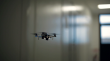 Phenox
 is a next-generation, fully programmable drone aircraft, designed and developed by Phenox Lab, an engineering team which is based in Tokyo, Japan. Its niche is its ability to fly without controls. Cameras installed in the underside of the Phenox…
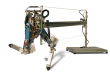 Phides
Developed at the Delft University of Technology, Phides is a 2D running robot with actuated knees and hips that are connected to a boom construction. Phides has achieved a successful flight phase, which is a phase in a running stride wherein the feet…
 Phoenix
KMUTT developed the Phoenix which is a soccer-playing robot. This lightweight humanoid robot has servomotors, sensors, camera and microprocessor which generate its movement.
 PHOPE
PHOPE was created by POSTECH University in Korea's robotic institute. This guide humanoid robot was designed to guide guests around buildings and other indoor settings. It has speech and facial recognition and a touchpad that displays map information.
 pi4-workerbot
pi4-Robotics humanoid robot, Pi4-Workerbot, was designed to work with humans in multi-tasking industrial settings. It does not need a programmer to run it. Pi4-Workerbot has 7 degrees of freedom and is under Laserscanner’s category 5 of safety.
 PICO 2
Fujitsu Robotics and Kyushu University developed PICO-2 from the HOAP-2 concept in 2005. The two foot tall human telepresence robot can walk and imitate human gestures.
 PIGORASS
A U. of Tokyo grad student built PIGORASS, a 13-foot robot quadruped with a simulated neural system, ABS resin/carbon fiber body, and both pneumatic and passive muscles.
 Pingo
A Facebook-integrated robotic desk pet, Pingo reads messages, news and weather forecasts; it also has a personality and responds to physical stimuli and electronic gifts.
 PINO
PINO is a 70 cm humanoid robot with research and educational applications. Released by ZMP in 2002, it utilizes a Linux-based open platform and PlayStation controllers.
 Pirkus-R
KDDI and I Bee of Japan developed a bipedal humanoid called Pirkus-R. It has the ability to see objects and faces, verify the faces against its own database and recognize them.
 Pithekos
DFKI Bremen created a four-legged galloping robot called the Pithekos. It is lightweight, fast, reliable and is able to take tight turns on different surfaces and terrains.
 Pivo-kun
 is the robotic guiding agent for Nissan's Pivo 2 electric concept car. It guides drivers using GPS, and keeps them alert by talking and nonverbal communication.
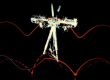 Planar Biped
MIT developed a two-legged planar running machine called Planar Biped. It has a flexible body, uses single-legged algorithms and is used to study movements on rough topography.
 Plen
Plen is a 23 cm desktop entertainment robot. The user-assembled humanoid is controlled via Bluetooth, and has a 32-bit ARM processor, 18 DOF and 20 pre-installed motions.
 Pleo
PLEO is a baby dinosaur robot with realistic appearance and natural motion thanks to force-feedback and surface detection sensors. It's upgradeable via USB or SD card.


 Perfect Puppy Buddy
 Perfect Puppy Bella

 Pneuborn 13
 Pneuborn 7II
